

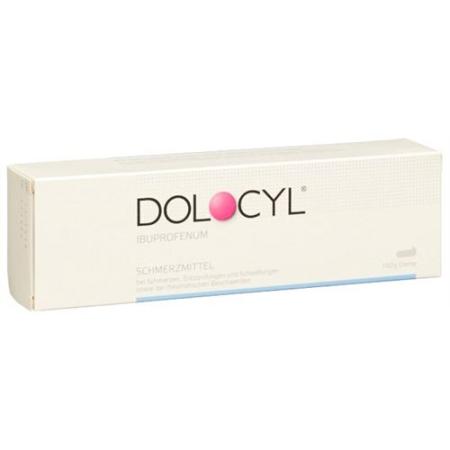
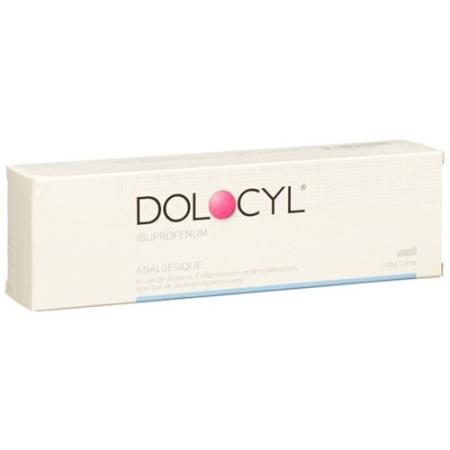
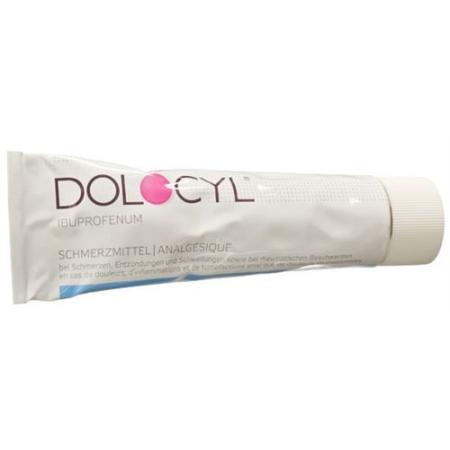
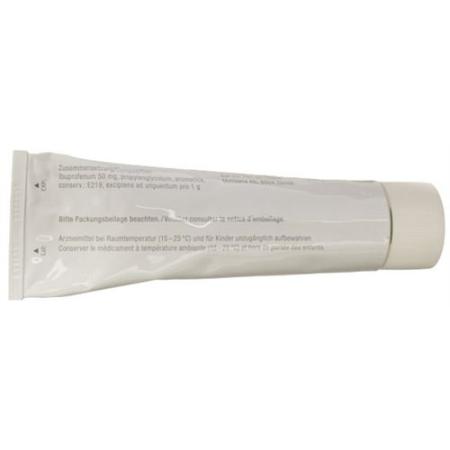
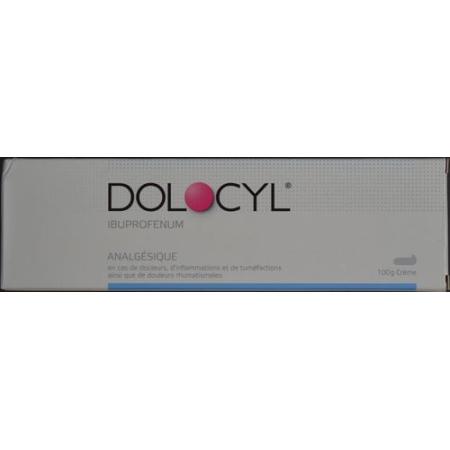
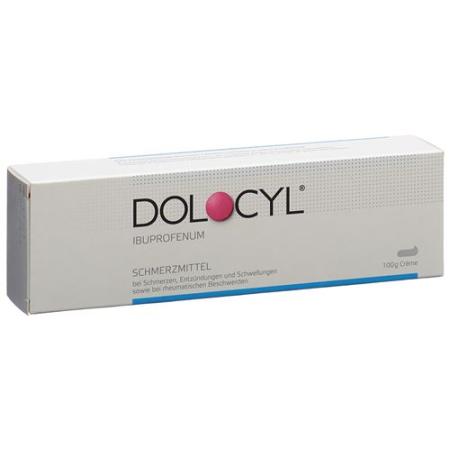
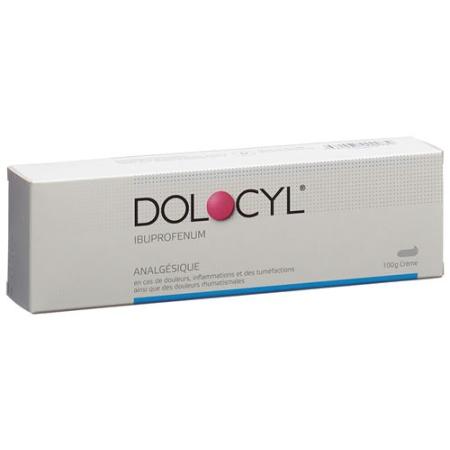
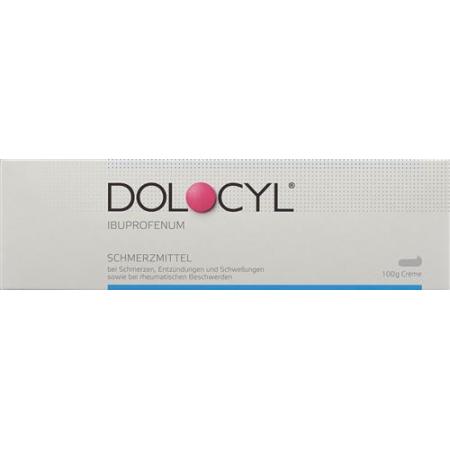
Dolocyl Cream Tb 100g
Dolocyl 100 g Creme
Send a request to get a price
Not availableDescription - Dolocyl Cream Tb 100g
Dolocyl Crème is an analgesic and anti-inflammatory drug for application to the skin. Dolocyl Crème is used externally to treat pain, inflammation and swelling: -in sports and accidental injuries, such as sprains, bruises and strains; -as a supportive measure for the local treatment of rheumatic complaints of the musculoskeletal system.
Swissmedic-approved patient information
Dolocyl® Crème
What is Dolocyl Crème and when is it used?
Dolocyl Cream is an analgesic and anti-inflammatory drug to be applied to the skin. Dolocyl Crème is used externally to treat pain, inflammation and swelling: -in sports and accidental injuries, such as sprains, bruises and strains; -as a supportive measure for the local treatment of rheumatic complaints of the musculoskeletal system.
When should Dolocyl Crème not be used?
In principle, Dolocyl Crème should not be used on babies and small children. Dolocyl Crème must not be used: -In case of hypersensitivity to the active ingredient ibuprofen or to other pain and anti-inflammatory substances, in particular acetylsalicylic acid/aspirin. -In case of hypersensitivity to one of the excipients (see section: «What does Dolocyl Crème contain?»).
When is caution required when using Dolocyl Crème?
Dolocyl Crème should not be applied to open wounds, damaged skin (e.g. eczema) or mucous membranes. Dolocyl Crème should not be used on large areas for a long period of time, unless prescribed by a doctor. Avoid contact with eyes and wash hands well after use. Tell your doctor, pharmacist or druggist if you ?suffer from other diseases, ? Have allergies or ?Take other medicines (including those you bought yourself!) or use them externally.
Can Dolocyl Crème be used during pregnancy or breastfeeding?
Dolocyl Crème must not be used during pregnancy and breastfeeding, unless expressly prescribed by a doctor; then Dolocyl Crème should only be used for a short time and not over a large area.
How do you use Dolocyl Crème?
Adults and adolescents aged 14 and over Unless otherwise prescribed by the doctor, apply a 4-10 cm long strand of cream 3-4 times a day, or more often if necessary, and rub gently into the skin. Severe bruises and sprains may benefit from the use of a bandage at the beginning of treatment. Wash hands after use. Tell your doctor if symptoms worsen or if symptoms have not improved after 2 weeks. Children under the age of 14 The use and safety of Dolocyl Crème in children under the age of 14 has not yet been tested. Follow the dosage given in the package leaflet or as prescribed by your doctor. If you think the medicine is too weak or too strong, talk to your doctor, pharmacist or druggist.
What side effects can Dolocyl Crème have?
Uncommon (affects 1 to 10 users in 1,000) Occasionally, especially when applying a bandage, a slight tingling sensation may be felt in the area of ??application for a few minutes after application. Rare (affects 1 to 10 users in 10,000) In rare cases, skin redness, itching or a rash may occur. Very rare (affects less than 1 in 10,000 users) Very rare are severe skin rashes or hypersensitivity reactions such as shortness of breath, facial swelling. In these cases, treatment with Dolocyl Crème should be discontinued and the doctor consulted. Frequency not known (cannot be estimated from the available data) The skin becomes sensitive to light. If you get any side effects, talk to your doctor, pharmacist or druggist. This also applies in particular to side effects that are not listed in this leaflet.
What else needs to be considered?
Durability The medicinal product may only be used up to the date marked «EXP» on the container. Storage Instructions Store at room temperature (15-25°C). Keep out of the reach of children. Further Notes Your doctor, pharmacist or druggist can provide you with further information. These people have the detailed information for specialists.
What does Dolocyl crème contain?
1 g of crème contains: Active ingredients 50 mg ibuprofen. Excipients Propylene glycol E 1520, Aromatica, the preservative E 219 (sodium methyl 4-hydroxybenzoate) and other additives.
Approval number
46590 (Swissmedic).
Where can you get Dolocyl Cream? What packs are available?
In pharmacies and drugstores without a doctor's prescription. Packs of 100 g and 150 g tubes.
Authorization holder
Melisana AG, 8004 Zurich. This leaflet was last checked by the drug authority (Swissmedic) in March 2021.
Description for the doctor
AMZV
Zusammensetzung
Wirkstoff: Ibuprofenum.
Hilfsstoffe: Propylenglycolum, aromatica, conserv.: E 219 (Methylis parahydroxybenzoas Natrium), excipiens ad unguentum pro 1g.
Galenische Form und Wirkstoffmenge pro Einheit
1 g Crème enthält 50 mg Ibuprofen.
Indikationen/Anwendungsmöglichkeiten
Dolocyl Crème wird äusserlich angewendet zur Behandlung von Schmerzen, Entzündungen und Schwellungen:
- bei Sport- und Unfallverletzungen, wie z.B. nach Verstauchungen, Prellungen und Zerrungen.
- als unterstützende Massnahme zur lokalen Behandlung von rheumatischen Beschwerden des Bewegungsapparates.
Dosierung/Anwendung
Erwachsene und Jugendliche über 14 Jahren
3-4 mal täglich, bei Bedarf auch öfter, einen 4-10 cm langen Crèmestrang auf die Haut über dem schmerzhaften Gewebe oder Gelenk auftragen und leicht in die Haut einreiben.
Bei starken Blutergüssen und Stauchungen kann zu Beginn der Behandlung durch die Anwendung eines Okklusivverbandes eine bessere Wirkung erzielt werden.
Dolocyl Crème kann als unterstützende Behandlung zusammen mit anderen Darreichungsformen von Dolocyl angewendet werden.
Die Dauer der Anwendung hängt von der Indikation und dem Behandlungserfolg ab. Es empfiehlt sich, die Behandlung nach 2 Wochen zu überprüfen.
Kinder unter 14 Jahren
Die Anwendung und Sicherheit von Dolocyl Crème bei Kindern unter 14 Jahren ist bisher nicht geprüft worden.
Kontraindikationen
- Bekannte Überempfindlichkeit gegenüber dem Wirkstoff oder einem der Hilfsstoffe gemäss Zusammensetzung;
- Überempfindlichkeit auf Acetylsalicylsäure oder andere nichtsteroidale Antiphlogistika.
Warnhinweise und Vorsichtsmassnahmen
Dolocyl Crème soll nur auf intakten Hautflächen angewendet werden. Augen und Schleimhäute sollen mit dem Präparat nicht in Berührung kommen.
Interaktionen
Wechselwirkungen von Dolocyl Crème mit anderen Arzneimitteln sind bisher nicht bekannt geworden (siehe auch letzter Abschnitt in der Rubrik «Unerwünschte Wirkungen»).
Schwangerschaft/Stillzeit
Schwangerschaft
1. und 2. Trimenon
Tierexperimentelle Untersuchungen haben keine Hinweise auf eine teratogene Wirkung ergeben. Es liegen jedoch keine kontrollierten klinischen Studien bei schwangeren Frauen vor. Bei Anwendung im 1. und 2. Trimenon ist deshalb Vorsicht geboten.
3. Trimenon
Wegen möglichen vorzeitigen Verschlusses des Ductus arteriosus Botalli und möglicher Wehenhemmung soll Dolocyl Crème im 3. Trimenon nicht angewendet werden.
Stillzeit
In den wenigen verfügbaren Studien konnte Ibuprofen nach oraler Applikation in niedrigen Mengen in der Muttermilch nachgewiesen werden. Dolocyl Crème sollte in der Stillzeit nicht angewendet werden.
Wirkung auf die Fahrtüchtigkeit und auf das Bedienen von Maschinen
Nicht zutreffend.
Unerwünschte Wirkungen
Häufigkeiten: Sehr häufig (≥1/10), häufig (≥1/100, <1/10), gelegentlich (≥1/1000, <1/100), selten (≥1/10'000, <1/1000), sehr selten (<1/10'000).
In seltenen Fällen können Hautrötungen, Juckreiz oder Hautausschlag auftreten. Gelegentlich kann, besonders bei Anwendung eines Okklusivverbandes, einige Minuten nach dem Auftragen ein leichtes Kribbeln im Anwendungsbereich empfunden werden.
Systemische Reaktionen:
Sehr selten: generalisierter Hautausschlag; Überempfindlichkeitsreaktionen z.B. Asthmaanfall, Quincke-Ödem.
Die Wahrscheinlichkeit, dass unter topischer Anwendung von Ibuprofen systemische Nebenwirkungen auftreten, ist im Vergleich zu der Häufigkeit von Nebenwirkungen unter oraler Behandlung mit Ibuprofen gering.
Wenn Dolocyl Crème auf grösseren Flächen und während längerer Zeit angewandt wird, ist das Auftreten von systemischen Nebenwirkungen nicht völlig auszuschliessen. In solchen Fällen sollte die Fachinformation über die orale Arzneiform von Dolocyl konsultiert werden.
Überdosierung
Vergiftungen nach lokaler Anwendung von Dolocyl Crème sind, infolge der im Vergleich zur oralen Gabe geringeren kutanen Resorption, nicht zu erwarten.
Sollten als Folge von unsachgemässer Anwendung oder akzidenteller Überdosierung systemische Nebenwirkungen auftreten, sind die allgemeinen, zur Behandlung von Vergiftungen mit nichtsteroidalen Antiphlogistika üblichen therapeutischen Massnahmen anzuwenden.
Eigenschaften/Wirkungen
ATC-Code: M02AA13
Dolocyl Crème besitzt analgetische und antiphlogistische Wirkungen, die im Wesentlichen auf der Hemmung der Prostaglandinsynthese im Entzündungsgewebe beruhen.
Pharmakokinetik
Ibuprofen penetriert aus Dolocyl Crème unmittelbar durch die Haut in das darunterliegende Gewebe, in das Gelenk und in die Synovialflüssigkeit.
Im Plasma werden dagegen nach lokaler Anwendung der Dolocyl Crème nur äusserst geringe Mengen des Wirkstoffes nachgewiesen, welche ohne therapeutische Relevanz sind.
Aus vergleichbaren Untersuchungen (Ibuprofen-Gabe oral/lokal) ergibt sich eine Resorptionsquote für Ibuprofen aus Dolocyl Crème von ca. 5%.
Die Metabolisierung des Ibuprofen nach kutaner Gabe ist der nach oraler Gabe gleich. Nach Urinuntersuchungen ergeben sich keine qualitativen Differenzen der chromatographisch im Urin nachweisbaren Metaboliten.
Präklinische Daten
Es sind keine für die Anwendung relevanten präklinischen Daten vorhanden.
Sonstige Hinweise
Haltbarkeit
Das Arzneimittel darf nur bis zu dem auf dem Behälter mit «EXP» bezeichneten Datum verwendet werden.
Besondere Lagerungshinweise
Das Arzneimittel ist für Kinder unerreichbar und bei Raumtemperatur (15-25 °C) aufzubewahren.
Zulassungsnummer
46590 (Swissmedic).
Zulassungsinhaberin
Melisana AG, 8004 Zürich.
Stand der Information
März 2015.