

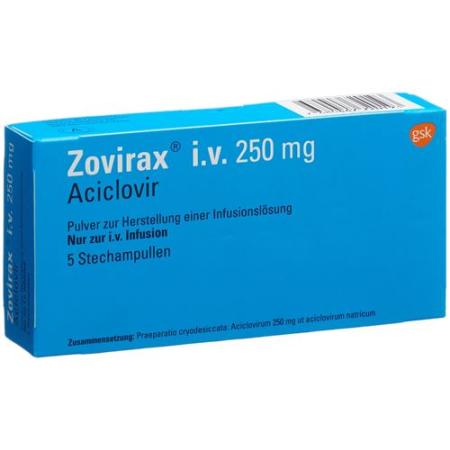
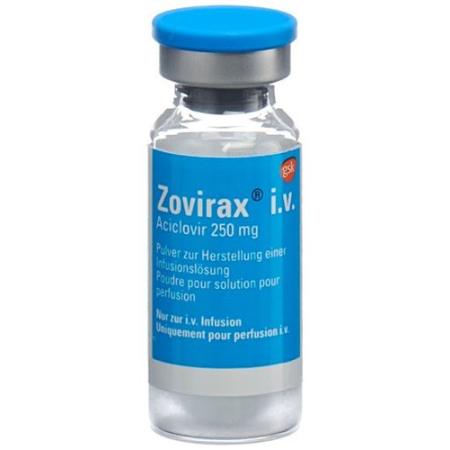
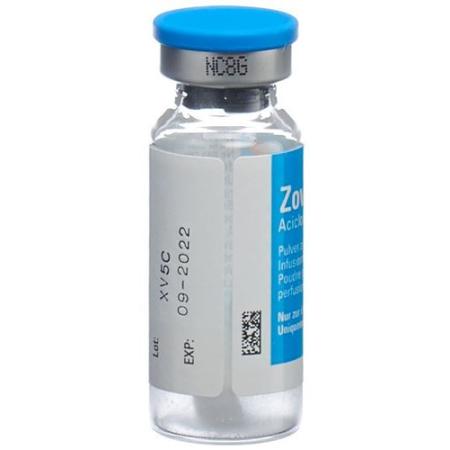
Zovirax dry sub 250 mg i.v. Amp 5 pcs
Zovirax Trockensubstanz 250 mg i.v. 5 Ampullen
Send a request to get a price
Not availableDescription - Zovirax dry sub 250 mg i.v. Amp 5 pcs
Composition
Active ingredient: Aciclovirum ut Aciclovirum natricum (Praeparatio cryodesiccata).Auxiliary materials: none.
Galenic form and amount of active ingredient per unit
250 mg ampoules.
Indications / possible usesHerpes simplex 1 and 2 virus infections
- Skin and mucous membrane infections, especially primary and recurrent genital herpes and herpes labialis;Herpes simplex encephalitis;Prophylaxis of herpes simplex infections in the event of immunosuppression;Suppression of recurrent herpes simplex infections (especially genital herpes); in the case of immunocompetent people who cannot be adequately influenced in any other way and cause frequent and long-lasting complaints;Herpes simplex keratitis;Herpes simplex in newborns.
Herpes varicella zoster virus infections
Herpes zoster infections (start therapy as early as possible, ie within 72 hours), in immunocompetent, but especially in immunosuppressed, in disseminated forms and zoster ophthalmicus.A positive influence on post-therapeutic neuralgia (PHN) is currently insufficiently proven.
Allogeneic bone marrow transplant (BMT)
Zovirax iv is used for CMV prophylaxis in allogeneic BMT in CMV-seropositive patients or in seronegative patients with a seropositive donor. Prophylaxis begins 5 days before the transplant and ends on day 30. If CMV is detected in the blood later, early treatment with an anti-CMV-active substance (eg ganciclovir) must be initiated.
Dosage / application
The required dose is slowly infused iv over 1 hour.Treatment usually lasts 5 days, but depends primarily on the patient's condition and the success of the therapy.Treatment of herpes encephalitis in patients 3 months and older usually lasts 10 days, and treatment of herpes simplex in newborns 14-21 days (see below).
Adults and children over 12 yearsHerpes simplex
5 mg / kg / 8 hourly.
Herpes zoster
5 mg / kg / 8 hourly.
Herpes zoster in immunocompromised and normal kidney function
10 mg / kg / 8 hourly for 5 days and more.
Herpes encephalitis
10 mg / kg / 8 hourly for 10 days.
CMV prophylaxis in allogeneic bone marrow transplant recipients
500 mg / m 2 /8-hour.Duration: 5 days before transplant to 30 days after.
Infants, toddlers and children between 3 months and 12 years of ageHerpes simplex
250 mg / m 2 /8-hour.
Varicella zoster
250 mg / m 2 /8-hour.
Varicella infection in immunocompromised and normal kidney function
500 mg / m 2 /8-hour.
Herpes encephalitis
500 mg / m 2 /8-hour for 10 days.
Allogeneic BMT (children> 2 years)
500 mg / m 2 /8-hour, beginning 5 days before transplant to 30 days thereafter.The limited data available suggest that children over two years of age in need of a bone marrow transplant should receive the adult dose for prophylaxis of CMV infection.
Newborn
The recommended treatment regimen for known or suspected neonatal herpes simplex infection is 20 mg / kg body weight every 8 hours. The duration of treatment for a disseminated infection or a CNS infection is 21 days, the infection is limited to the skin and mucous membranes for 14 days.Newborns with impaired kidney function require a dose that is adapted to the kidney function.
Elderly patients
The possibility of impaired renal function must be taken into account in elderly patients and the dosage must be adjusted accordingly (see ?Dosage in the case of impaired renal function?). Adequate hydration must be ensured.
Dosage for impaired kidney function
Caution should be exercised when administering acyclovir parenterally to patients with impaired renal function. Adequate hydration must be ensured.The dosage recommendation for patients with impaired renal function is based on the creatinine clearance in mL / min for adults and adolescents and on mL / min / 1.73 m 2 for toddlers and children under 13 years of age .The following dose adjustments are recommended:
Adults and adolescents:
| Creatinine ClearanceDosage iv |
| > 50 mLrecommended dose (5 or 10 mg / kg or 500 mg / m 2 ) every 8 hours25-50 mL / minrecommended dose every 12 hours10-25 mL / minrecommended dose every 24 hours0 (anuric) -10 mL / min½ recommended dose every 24 hoursOn hemodialysis½ recommended dose every 24 hours and after dialysis |
Newborns, infants, toddlers and children up to 12 years:
| Creatinine ClearanceDosage iv |
| > 50 mL / min / 1.73 m 2recommended dose (250?500 mg / m 2 or 20 mg / kg) every 8 hours25-50 mL / min / 1.73 m 2recommended dose every 12 hours10-25 mL / min / 1.73 m 2recommended dose every 24 hours0 (anuric) -10 mL / min / 1.73 m 2½ recommended dose every 24 hoursOn hemodialysis½ recommended dose every 24 hours and after dialysis |
Preparation of the infusion solution
As there is no preservative in the ampoules, reconstitution of the Zovirax solution and dilution with other infusion solutions must be performed under aseptic conditions, preferably immediately before use, and any unused reconstituted solution should be discarded.
Reconstitution of the Zovirax solution:
The freeze-dried acyclovir is dissolved with 10 mL Aqua ad iniectabilia or NaCl 0.9%. 1 mL of this solution corresponds to 25 mg acyclovir. For application, either this solution is injected using an infusion pump over 1 hour (not faster!) Or it is diluted with an infusion solution.
Dilution with other infusion solutions:
The following can be used for this:0.45% or 0.9% NaCl;0.18% NaCl + 4% glucose;0.45% NaCl + 2.5% glucose;Hartmann's solution (lactate infusion solution).Biological or colloidal liquids (blood reserves, protein-containing solutions) should not be used.Please note the following when diluting:For adults , the required amount of acyclovir should be added to at least 50 mL of liquid. Doses of 250 to 500 mg can be added to a 100 mL infusion solution. If the dosage is higher, a second infusion or more liquid would have to be selected.For children and newborns , where the dose can be 100 mg or less, 4 mL of dissolved acyclovir (100 mg acyclovir) should be added to 20 mL of solution for infusion.Shake the infusion solution well after adding Zovirax. If the dilution is made correctly, the aciclovir concentration will not exceed 5 mg / mL (0.5%).The infusion solution is stable for up to 12 hours at room temperature (15?25 ° C) (chemical-physical stability).If clouding or crystallization occurs before or during the infusion, the infusion solution must not be used.
Contraindications
Zovirax is contraindicated in patients with known hypersensitivity to acyclovir and valaciclovir.
Warnings and Precautions
Use in patients with impaired renal function and the elderly: Acyclovir is excreted renally, so the dosage must be reduced in patients with impaired renal function (see ?Dosage / Use?). Elderly patients are more likely to have renal impairment and the need for a dose reduction should therefore be taken into account in this patient group. Both patients with impaired renal function and the elderly are at increased risk of developing neurological disorders and should therefore be closely monitored for signs of such adverse effects. In the reported cases, the disorders were generally reversible after treatment was discontinued (see ?Adverse effects?).If higher doses of Zovirax have to be infused, e.g. in the case of herpes encephalitis, the kidney function should be monitored, especially in dehydrated patients.Zovirax solution for infusion has a pH of approximately 11 and should therefore not be consumed.Since genital herpes is a sexually transmitted disease, patients should be instructed to avoid any sexual contact as long as visible lesions can be seen.Because of the potential risk of neutropenia, newborns receiving IV treatment with Zovirax should consider performing blood counts twice a week.
Interactions
Acyclovir is excreted unchanged by the kidneys, primarily through active tubular secretion. Co-administered drugs that compete with this mechanism can cause acyclovir plasma levels to rise. By this mechanism, probenecid and cimetidine cause an increase in AUC and a decrease in renal clearance of acyclovir. However, due to the wide therapeutic range of acyclovir, no dosage adjustment is necessary.In patients receiving Zovirax intravenously, caution should be exercised when administering drugs that compete with acyclovir for elimination, as plasma levels of one or both drugs or their metabolites may increase. An increase in the AUC of acyclovir and the inactive metabolite of mycophenolate mofetil, an immunosuppressive drug used in transplants, has been noted with concomitant administration of these drugs.Caution (and monitoring of renal function) should also be exercised when administering Zovirax intravenously and concomitantly with drugs that affect other aspects of renal function (e.g., cyclosporine and tacrolimus).
Pregnancy / lactationpregnancy
A pregnancy registry has documented the births of women (based on voluntary information) who were treated with acyclovir. No increase in the number of birth defects or individual abnormalities was found compared with the general population. In 1,082 births, 28 malformations were observed for which neither a constant pattern nor a common cause can be assumed. Nevertheless, intravenous and oral therapy is only indicated during pregnancy if this is clearly necessary (see also «Preclinical data»).
Fertility
There are no data to date on the effect of intravenous Zovirax on female fertility.In men with normal sperm count, no clinically relevant effects on sperm count, morphology and motility could be demonstrated after chronic oral administration of acyclovir.
Breastfeeding
After an oral dose of 200 mg 5 times a day, acyclovir concentrations in breast milk were found to be 0.6-4.1 times the plasma level. These concentrations would expose the infant to a dose of up to 0.3 mg / kg daily. You should therefore not breast-feed during treatment with Zovirax.
Effects on ability to drive and use machines
Zovirax iv is usually used in hospitalized patients.No studies on the effects of Zovirax on the ability to drive or use machines have been performed.Due to central nervous side effects under Zovirax, an influence on the ability to drive and use machines cannot be excluded.
Unwanted effects
The observed adverse reactions were classified according to their frequency as follows: Very common (?1 / 10), common (?1 / 100 to occasionally (?1 / 1,000, rare (?1 / 10,000, very rare (
Blood and lymphatic system
Uncommon: decrease in haematological parameters (anemia, thrombocytopenia, leukopenia, neutropenia).
Systemic hypersensitivity reactions
Very rare: life-threatening anaphylaxis, fever, angioedema.
Psychiatric disorders and nervous system disorders
Very rare: headache, dizziness, agitation, confusion, tremor, ataxia, dysarthria, hallucinations, psychotic symptoms, convulsions, somnolence, encephalopathy (including toxic encephalopathy), coma.In addition to isolated fatal cases, these events were mostly reversible and were usually observed in patients with impaired renal function or other predisposing factors, such as old age without pre-existing renal insufficiency. Dialysis treatment has often been successfully used therapeutically.
Vessels
Common : phlebitis.
Respiratory system
Very rare: dyspnoea.
Gastrointestinal tract
Common: nausea, vomiting.Very rare : diarrhea, abdominal pain.
Liver and bile
Common: Reversible increase in liver enzyme levels.Very rare: reversible increase in bilirubin, jaundice, hepatitis.
Skin and subcutaneous tissue
Common: pruritus, urticaria, rash (including sensitivity to light).Very rare: Diffuse hair loss.
Kidneys and urinary tract
Common: increases in blood urea and creatinine.It is assumed that a rapid rise in blood urea and creatinine levels are related to the maximum plasma levels and the patient's hydration status (see also ?Overdose?). To avoid this, the drug should not be injected intravenously as a bolus, but given as a slow infusion over an hour.Very rare: kidney dysfunction, acute kidney failure, kidney pain.Make sure that you drink enough fluids. A deterioration in renal function usually responds quickly to rehydration of the patient and / or a reduction in the dosage or to discontinuation of the drug. However, the development of acute kidney failure can occur in exceptional cases.Kidney pain can be associated with kidney failure.
General disorders and reactions at the application site
Very rare: tiredness, local inflammatory reactions.Severe local inflammatory reactions, which in some cases resulted in skin destruction, have occurred when Zovirax is accidentally infused into extravascular tissue.
Overdose
Overdoses of intravenous acyclovir have increased serum creatinine and urea nitrogen levels in the blood and subsequently led to kidney failure. Neurological reactions, including confusion, hallucinations, agitation, seizures, and coma have been reported in association with overdose.Treatment: Patients should be carefully monitored for signs of toxic effects. Hemodialysis significantly improves the elimination of acyclovir from the blood and can therefore be considered as a treatment option in the event of an overdose of this drug.
Properties / effects
ATC code: J05AB01
Mechanism of action
Aciclovir is an antiviral substance which has an inhibitory effect in vitro and in vivo against herpes simplex viruses (HSV) types 1 and 2 and against varicella zoster viruses (VZV).In cell culture, acyclovir has the greatest antiviral activity against HSV 1, followed by decreasing activity against HSV 2 and VZV. The inhibitory effect of acyclovir on HSV 1, HSV 2 and VZV is very selective. The thymidine kinase (TK) of the normal, uninfected cell hardly uses acyclovir as a substrate, so the toxicity to the host cell is low. The TK, on ??the other hand, which is coded by the HSV or VZV, converts acyclovir into acyclovir monophosphate, a nucleoside analogue, which is converted into diphosphate and finally into triphosphate by cell enzymes. The aciclovir triphosphate interferes with the viral DNA polymerase and prevents the viral DNA replication, so that the chain is broken after being incorporated into the viral DNA.Prolonged and repeated use of acyclovir in severely immunocompromised individuals can result in strains of the virus with reduced susceptibility that no longer respond to acyclovir therapy. Most of the time the clinical isolates with reduced sensitivity show a relative deficiency in viral TK, but strains with altered viral TK or viral DNA polymerase have also been found. Also in vitro less sensitive strains can occur during the exposure of HSV isolates with acyclovir. The relationship between the in vitro susceptibility of the HSV isolates and the clinical response to acyclovir therapy is not clear. It is therefore important to avoid contact with active lesions that would encourage virus transmission.
Pharmacokineticsabsorption
In adults, the mean steady-state plasma concentrations after a 1 hour infusion performed every 8 hours with Zovirax are 2.5 mg / kg, 5 mg / kg, 10 mg / kg and 15 mg / kg: C max 5, 1 µg / mL, 9.8 µg / mL, 20.7 µg / mL and 23.6 µg / mL and C min measured 7 hours later: 0.5 µg / mL, 0.7 µg / mL, 2.3 µg / mL and 2.0 µg / mL.
distribution
The plasma protein binding is relatively low (9-33%) and interactions through displacement are not to be assumed. The concentration in the liquor reaches approx. 50% of the plasma level and that in the vesicle contents of herpetic skin lesions corresponds approximately to the plasma concentration. The mean steady-state volume of distribution in the adult is 48 L / 1.73 m 2 and in the newborn is 28.8 L / 1.73 m 2 . Acyclovir crosses the placenta and is also excreted in breast milk.The concentrations in breast milk are higher than the current plasma concentrations in the mother (see also «Pregnancy / Breastfeeding»).The mean ED 50 for HSV should be 0.1 µg / mL and for VZV 1 µg / mL.
Metabolism / Elimination
9-Carboxymethoxymethylguanine is the only significant acyclovir metabolite and accounts for about 10-15% of the amount excreted in the urine.After intravenous administration of acyclovir, the half-life in adults is approximately 2.9 hours. Most acyclovir is excreted unchanged by the kidneys. The renal aciclovir clearance is significantly greater than the creatinine clearance, so that in addition to glomerular filtration, tubular secretion must also be involved in the renal excretion of the drug.The extrarenal elimination is 10% (Q 0 = 0.1) and the total body clearance is 260 ± 81 mL / min / 1.73 m 2 .
Kinetics of special patient groups
In children over 1 year of age , similar values ??for C max and C min were measured as in adults when doses of 250 mg / m 2 instead of 5 mg / kg and 500 mg / m 2 instead of 10 mg / kg were administered.The mean half-life between the ages of 1 and 17 years is 2.5 hours.In newborns (0-3 months) who were given a 1-hour infusion 8 hours a day at a dose of 10 mg / kg resp. 15 mg / kg were treated, a C max of 13.8 µg / mL respectively was found. 18.8 µg / mL and a C min of 2.3 µg / mL resp. 3.2 µg / mL. The half-life was 3.8 hours.Basically, the t ½ depends on the maturity of the renal excretion mechanisms, which in turn is a function of gestational age, chronological age and weight.The mean total body clearance in the newborn at term is approximately 1/3 that of the adult.In the elderly , whole-body clearance decreases with age, associated with a decrease in creatinine clearance with no significant change in half-life.In patients with chronic renal failure , the half-life is 19.5 hours and the half-life during hemodialysis is 5.7 hours. The plasma level of acyclovir falls by about 60% during dialysis.Studies have shown that the pharmacokinetic data of acyclovir and zidovudine do not change when the two substances are used together in HIV-infected people.
Preclinical dataMutagenicity / Carcinogenicity
In-vitro and animal-experimental mutagenicity tests do not yet indicate a genetic risk for humans; Acyclovir is not carcinogenic.
Teratogenicity
When used systemically, acyclovir had no embryotoxic or teratogenic effects in internationally accepted standard tests in rabbits, rats and mice.In a non-standardized test in rats, fetal malformations occurred, but only at very high subcutaneous doses that were toxic to the mother. The clinical significance of this observation is still unclear.
Other notesIncompatibilities
Zovirax iv should be used in the specified infusions (see «Preparing the infusion solution») and in the specified concentration. Biological or colloidal liquids (blood reserves, protein-containing solutions) should not be used.
durability
The medicinal product should only be used up to the date marked ?EXP? on the pack.
Special storage instructions
The ampoules should not be stored above 25 ° C and out of the reach of children.As there is no preservative in the ampoules, the reconstituted Zovirax solution should be made up immediately before use. Discard any unused reconstituted solution. The solution diluted with another infusion solution can be kept for up to 12 hours at room temperature (15?25 ° C) (chemical-physical stability).
Approval number
44772 (Swissmedic).
Marketing authorization holder
GlaxoSmithKline AG, 3053 Münchenbuchsee.