

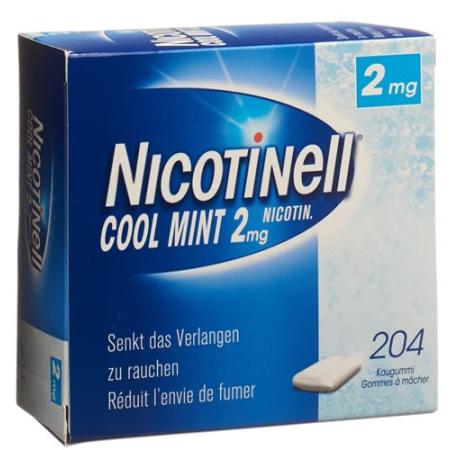
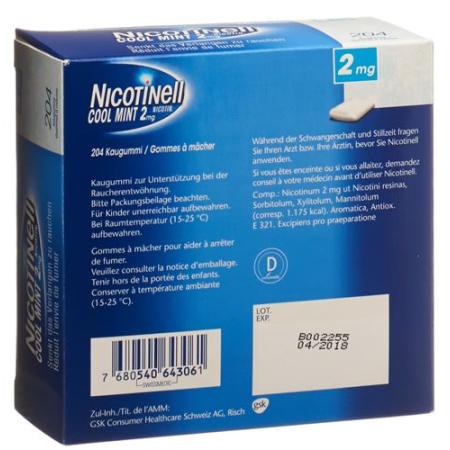
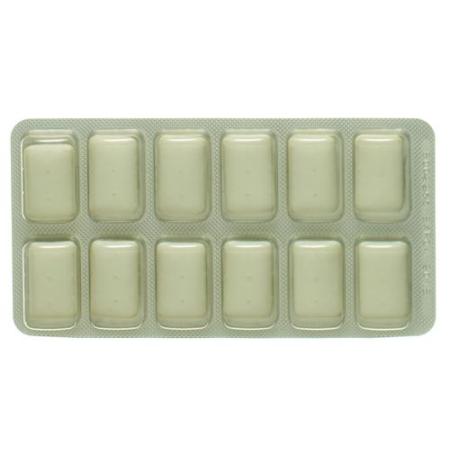
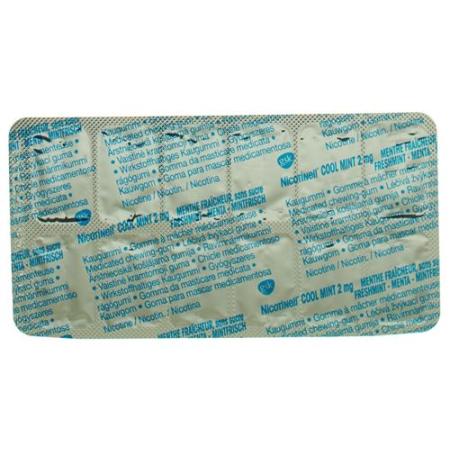
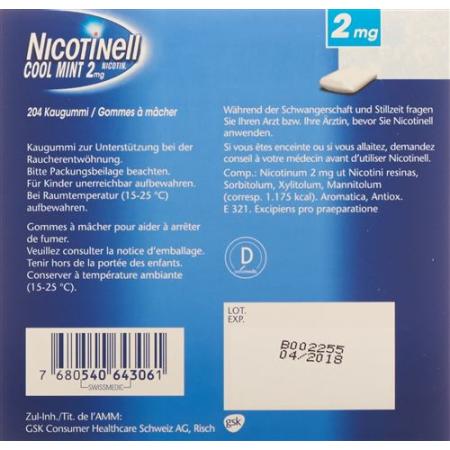
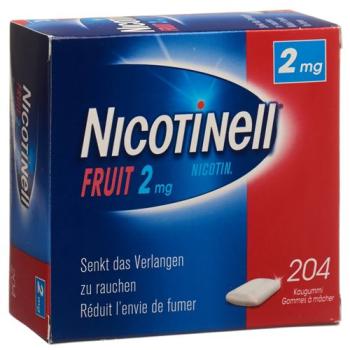
Nicotinell Gum 2 mg cool mint 204 pieces
Nicotinell Cool Mint 2 mg 204 Kaugummi
Send a request to get a price
In stock 100 pcsAnalogues of the product based on the Anatomical Therapeutic Chemical (ATC) Classification - N07BA01
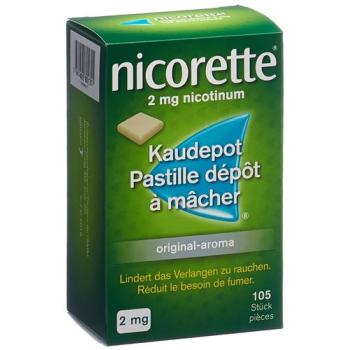
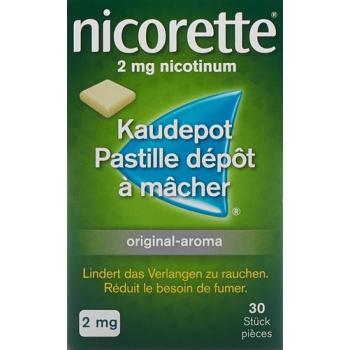
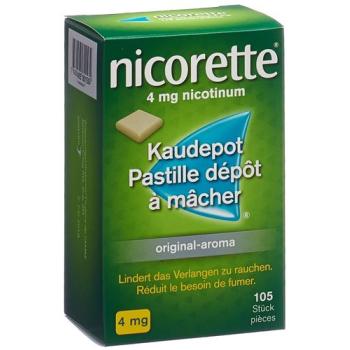
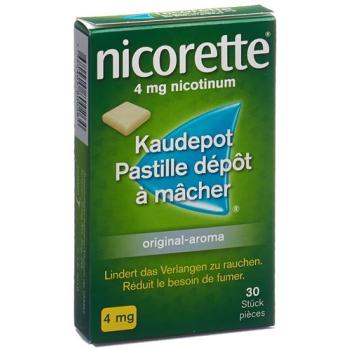
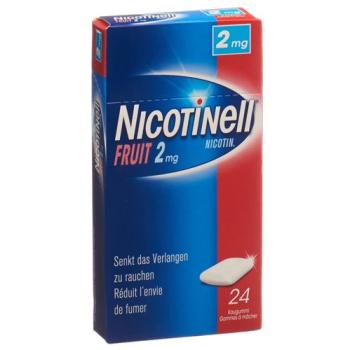
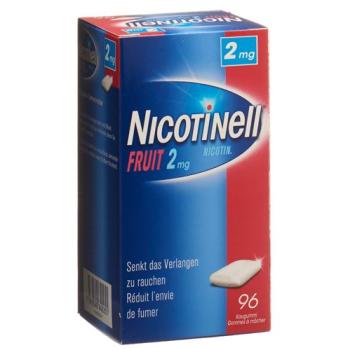
Description - Nicotinell Gum 2 mg cool mint 204 pieces
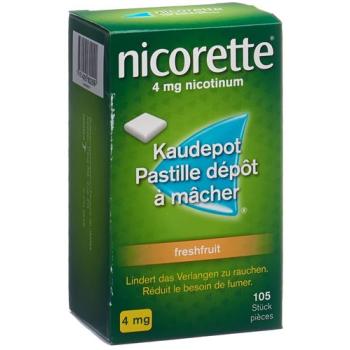
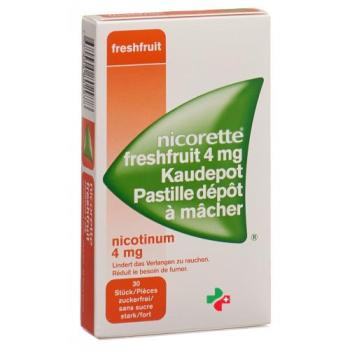
Nicotinell Cool Mint and Fruit are chewing gums containing nicotine. They are recommended as support when trying to quit smoking or to reduce cigarette consumption as a first step. When using the chewing gum, nicotine is released for about 30 minutes. Nicotine is the addictive component in tobacco smoke and is responsible for the various withdrawal symptoms associated with smoking cessation. Administering nicotine with Nicotinell reduces these withdrawal symptoms and makes it easier for smokers to give up cigarette nicotine. Experience has shown that as you develop new habits (substitutes for smoking) over a period of time, you will find it easier to gradually use less Nicotinell chewing gum and later to give up altogether. Health damage caused by the tar and carbon monoxide content in tobacco smoke is avoided.
Swissmedic-approved patient information
Nicotinell Cool Mint, Fruit 2 mg/4 mg, chewing gum
What is Nicotinell chewing gum and when is it used?
Nicotinell Cool Mint and Fruit are chewing gums containing nicotine. They are recommended as support when trying to quit smoking or to reduce cigarette consumption as a first step. When using the chewing gum, nicotine is released for about 30 minutes. Nicotine is the addictive component in tobacco smoke and is responsible for the various withdrawal symptoms associated with smoking cessation. Administering nicotine with Nicotinell reduces these withdrawal symptoms and makes it easier for smokers to give up cigarette nicotine. Experience has shown that as you develop new habits (substitutes for smoking) over a period of time, you will find it easier to gradually use less Nicotinell chewing gum and later to give up altogether. Health damage caused by the tar and carbon monoxide content in tobacco smoke is avoided.
What should be considered?
Your motivation and willpower are decisive for the success of the treatment. If you use Nicotinell chewing gum to reduce cigarette consumption, there is probably no risk of higher nicotine levels than with regular smoking if Nicotinell chewing gum is used during the smoke-free intervals. If you use Nicotinell chewing gum as part of a weaning cure, you should stop smoking completely, as continuing to smoke carries the risk of side effects, including for the heart and circulatory system, due to a higher nicotine level than with habitual smoking is given. It is therefore important that you are strongly motivated to quit smoking before starting Nicotinell treatment. Professional smoking advice increases the chances of quitting successfully. Nicotinell chewing gums are not stimulants. It may take a few days for you to get used to the taste of Nicotinell chewing gum. Nicotinell Cool Mint is a peppermint flavored alternative with Fruit flavored. Nicotinell Fruit is sweetened with the sugar substitutes sorbitol, xylitol, mannitol and the sweetener saccharin. Nicotinell Cool Mint is sweetened with the sugar substitutes sorbitol, xylitol and mannitol. Therefore, Nicotinell chewing gum can also be used by diabetics, taking into account the precautionary measures (see «When should you be careful when using Nicotinell chewing gum?»).
When should Nicotinell chewing gum not be used?
Nicotinell chewing gum should not be used in the following cases:
- If you are known to be hypersensitive to nicotine or one of the additives according to the composition.During pregnancy and breastfeeding (see «Can Nicotinell chewing gum be used during pregnancy or while breastfeeding?»).Nicotinell chewing gum may not be used by children under the age of 12 and, in principle, also not by young people! For young people under the age of 18 and over 12 years of age, the drug should only be used if they are heavily dependent on nicotine and only after consulting a doctor.
When should Nicotinell chewing gum be used? Caution required?
If you have a health condition, chronic throat disease, or any of the following conditions, you should carefully discuss the benefits and risks with your healthcare professional before beginning your Nicotinell treatment program :
- Diabetes mellitus: when you start nicotine replacement therapy, you should check your blood sugar levels more frequently than usual, as blood sugar levels can fluctuate more widely. The drug therapy may need to be adjusted;Cardiovascular diseases such as stable angina pectoris, recent heart attack, cardiac arrhythmia, heart failure (heart failure), high blood pressure, circulatory disorders in the arms or legs (e.g. smoker's leg), diseases of the blood vessels, stroke;Kidney and liver diseases;Hyperthyroidism, pheochromocytoma (adrenaline-producing tumor of the adrenal gland);Inflammation of the lining of the stomach or stomach and intestines, inflamed esophagus. Nicotine replacement therapy may worsen symptoms;Epilepsy if you have a history of seizures.
addicted smokers immediately (less than 4 weeks) after a heart attack, with severe abnormal heart rhythms or who have recently had a stroke should only use Nicotinell Chewing Gum under medical supervision. In these cases, the use of the preparation should only be considered if smoking cessation is not possible without the support of medication. If new cardiovascular symptoms develop or existing symptoms worsen (chest pain, irregular pulse, shortness of breath), a doctor should be consulted. This medicine may affect your ability to react, your ability to drive and your ability to use any tools or machines.
Information on the excipientsSorbitol (E420)
This medicinal product contains sorbitol. Sorbitol is a source of fructose. Talk to your doctor before using this medicine if your doctor has told you that you have an intolerance to some sugars or if you have hereditary fructose intolerance (HFI) - a rare inherited condition that affects a person Can not break down fructose - was found. Patients with congenital fructose intolerance should not take Nicotinell chewing gum.
Butylated hydroxytoluene (E321)
The chewing gum base contains butylated hydroxytoluene, which can cause local irritation of the mucous membrane. Tell your doctor, pharmacist or druggist if you
- suffer from other diseases,have allergies oruse other medicines (including those you bought yourself!).
Important interactions with other medicines
Smoking cessation with or without nicotine substitutes such as Nicotinell chewing gum can reduce the reaction to medicines administered at the same time, e.g. for asthma, cardiac arrhythmia, severe pain, mood disorders, Alzheimer's disease, Parkinson's disease, change restless leg syndrome or diabetes (insulin). If necessary, your doctor will prescribe a dose adjustment of the medicines concerned.
Can Nicotinell chewing gum be used while pregnant or breastfeeding?Pregnancy
If you are pregnant, you should try to quit smoking without using medicines. Nicotine in any form can harm the unborn child. No form of nicotine should be used during pregnancy, including Nicotinell chewing gum. Nicotine, and especially smoking, can seriously harm the health of the fetus and infant and should be discontinued during pregnancy. Talk to your doctor about how to quit smoking during this time.
Breastfeeding
Nicotine passes into breast milk. Nicotinell chewing gum should not be used while breast-feeding, and no other form of nicotine should be used. If it is necessary to use Nicotinell chewing gum, do not breastfeed and switch the infant to bottle feeding.
How do you use Nicotinell chewing gum?Nicotinell chewing gum is intended for adults over 18 years of age.
For adolescents under 18 years and over 12 years of age, the preparation should only be used if there is a strong nicotine dependency and only after consulting a doctor (see also ?When should Nicotinell chewing gum not be used??). The starting dose should be individualized based on nicotine dependency. 8-12 Nicotinell Gums of the appropriate dosage strength per day should usually be sufficient. If you are heavily addicted to nicotine, i. the first cigarette within 20 minutes of getting up and smoke more than 20 cigarettes a day, start treatment with Nicotinell 4 mg chewing gum. Nicotinell 2 mg chewing gum is usually sufficient for weak to moderate nicotine dependency. No more than 15 Nicotinell gums should be chewed per day. Use no more than 1 piece of gum per hour.
How to use
If you feel like smoking, chew Nicotinell chewing gum very slowly for about 30 minutes. Take regular breaks from chewing and let the chewed nicotine soak into your oral mucosa. Avoid chewing too quickly and too intensively so that too much nicotine is not released too quickly. Do not eat or drink while the gum is in your mouth. You should not have any drinks immediately before or during chewing, as this will greatly reduce the effect of the nicotine released.
Canceling
Most smokers need 8 to 12 gums of the appropriate strength per day. Up to 15 Nicotinell Gums can be chewed per day as needed. Use no more than 1 piece of gum per hour. After 8 weeks, it's time to start gradually cutting back on nicotine. For the next 2 weeks, reduce the number of gums you chew per day by half. Stop treatment after the next 2 weeks if you managed to get the dose down to zero on the last day. The duration of treatment is individual, but is a maximum of 3 months.
Reduction in cigarette consumption
The chewing gum is used during the smoke-free intervals in order to extend this as long as possible and thus reduce cigarette consumption as much as possible. Never use chewing gum and smoke at the same time or use chewing gum and smoke in direct succession without a break. If you have not achieved a significant reduction in your daily cigarette consumption after 6 weeks, you should seek advice from your doctor. You should try to quit smoking as soon as you feel ready, but no later than 6 months after starting treatment. If you still cannot stop smoking 9 months after starting treatment, you should see your doctor. The recommended duration of treatment with Nicotinell chewing gum is a maximum of 12 months. Unused chewing gum should be saved as the urge to smoke may suddenly come back. Stick to the dosage given in the package leaflet or as prescribed by your doctor. If you think the medicine is too weak or too strong, talk to your doctor, pharmacist or druggist.
What side effects can Nicotinell chewing gum have?
Most side effects occur during the first few weeks after starting Nicotinell treatment. In many cases, incorrect chewing technique is the reason. At the beginning of Nicotinell treatment, the oral mucosa may become somewhat irritated, or hiccups and nausea caused by chewing too quickly may occur. In these cases, stop chewing immediately and allow the gum to sit in a cheek pouch for 1 to 2 minutes. The delivery of nicotine is thus interrupted and the irritation quickly subsides. Then chew again very slowly with more breaks. Very common (affects more than 1 in 10 people): Headache, gastrointestinal complaints, hiccups, nausea, inflammation of the mouth and throat, pain in the chewing muscles. Common (affects 1 to 10 users in 100): dizziness, sore throat, pain in the throat, cough, vomiting, indigestion, abdominal pain, diarrhea, dry mouth, constipation, gas, inflammation of the mouth ( stomatitis). Uncommon (affects 1 to 10 in 1000 people treated): palpitations, palpitations and reddening of the skin, hives and abnormal sensations in the skin area. Rare (affects 1 to 10 users in 10,000): allergic reactions, swelling of the face/throat, tremor, shortness of breath, difficulty swallowing, belching, increased salivation, blistering of the oral mucosa, weakness, Fatigue, malaise, flu-like symptoms. Very rare (affects less than 1 in 10,000 people): Heart rhythm disturbances. Certain side effects such as canker sores, dizziness, headaches and insomnia can also be caused by the withdrawal symptoms that occur as part of smoking cessation. Persistent nicotine addiction can occur. Gum can stick to dentures and in rare cases damage them.
Overdose
An overdose can occur when you mistakenly chew multiple gums at the same time or in quick succession, or when you smoke at the same time. In the event of an overdose, the symptoms correspond to those of acute nicotine poisoning. The following occur: nausea, salivation, abdominal pain, vomiting, diarrhoea, hearing and vision disorders, headaches, tremors, tachycardia, sweating, hypothermia, dizziness, confusion, paleness and pronounced weakness. In extreme cases, the following can follow: cramps, drop in blood pressure, weak, irregular pulse, respiratory failure and fainting, circulatory collapse. In the event of an overdose or suspected overdose, the nicotine supply must be stopped immediately. Consult a doctor immediately. Even small amounts of nicotine are dangerous for children and can lead to severe symptoms of poisoning, which can be fatal. If you suspect nicotine poisoning in children, you must seek emergency medical help. If you get any side effects, talk to your doctor, pharmacist or druggist. This also applies in particular to side effects that are not listed in this leaflet.
What else needs to be considered?Special warning for children
Keep medicines out of the reach of children. Nicotine is a highly toxic substance. Even the dose tolerated by adults during treatment can lead to life-threatening symptoms of poisoning in children, possibly with a fatal outcome. Therefore, Nicotinell chewing gum must be kept out of the reach of children at all times or disposed of.
Shelf life
The medicinal product may only be used up to the date marked «EXP» on the container.
Storage instructions
Store at room temperature (15-25°C). Keep out of the reach of children.
Further information
Your doctor, pharmacist or druggist can provide you with further information. These people have the detailed information for specialists.
What does Nicotinell chewing gum contain?Active substance
1 Nicotinell 2 mg chewing gum contains: 2 mg nicotine ( as nicotine resinate). 1 Nicotinell 4 mg chewing gum contains: 4 mg nicotine (as nicotine resinate).
ExcipientsNicotinell chewing gum, Cool Mint
Sorbitol, xylitol, mannitol (chewing gum 2 mg: equivalent to 1.175 kcal; chewing gum 4 mg: equivalent to 1.136 kcal), chewing gum base [contains BHT (E 321)], calcium carbonate, sodium carbonate, sodium hydrogen carbonate, amberlite, glycerol, purified water, levomenthol, sucralose, acesulfame potassium, gelatin, titanium dioxide, carnauba wax, flavor (Cool Mint).
Nicotinell chewing gum, fruit
Sorbitol, xylitol, mannitol (chewing gum 2 mg: equivalent to 0.959 kcal; chewing gum 4 mg: equivalent to 0.92 kcal), chewing gum base [ contains BHT (E321)], Calcium Carbonate, Sodium Carbonate, Sodium Bicarbonate, Amberlite, Glycerol, Purified Water, Levomenthol, Saccharin, Sodium Saccharin, Acesulfame Potassium, Gelatin, Titanium Dioxide, Carnauba Wax, Flavor (Fruit).
Approval number
54064 (Swissmedic).
Where can you get Nicotinell chewing gum? What packs are available?
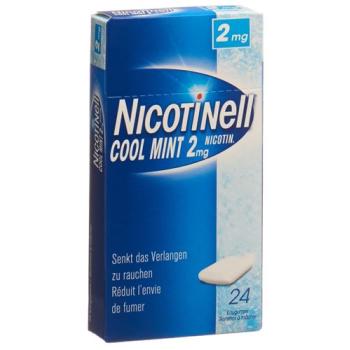
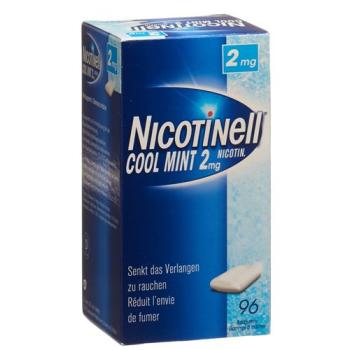
In pharmacies and drugstores, without a doctor's prescription. Nicotinell 2mg Fruit and Cool Mint: Packs of 12, 24, 96 and 204 gums. Nicotinell 4mg Fruit and Cool Mint: Packs of 12, 24 and 96 gums.
Authorization holder
GSK Consumer Healthcare Schweiz AG, Risch. This leaflet was last checked by the Medicines Agency (Swissmedic) in June 2021.