

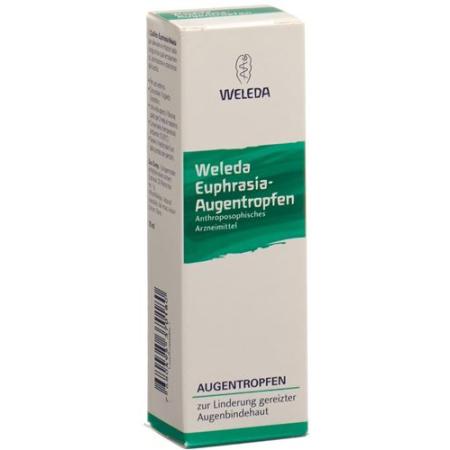
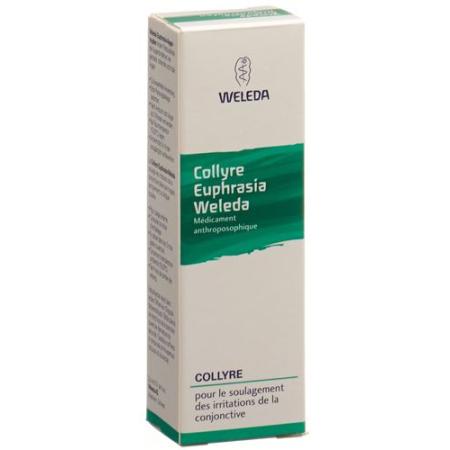
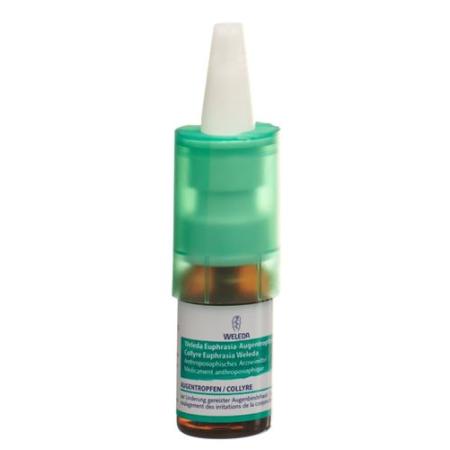
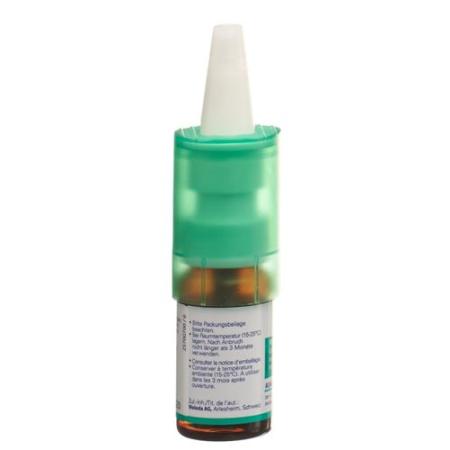
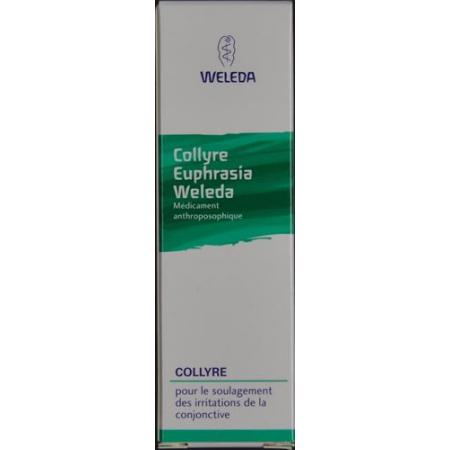
Weleda Euphrasia Eye Drops Bottle 10 ml
Weleda Euphrasia Augentropfen 10 ml
Send a request to get a price
Not availableAnalogues of the product based on the Anatomical Therapeutic Chemical (ATC) Classification - S01XA99
| Name | Code | EAN | Price | Original | ||
|---|---|---|---|---|---|---|
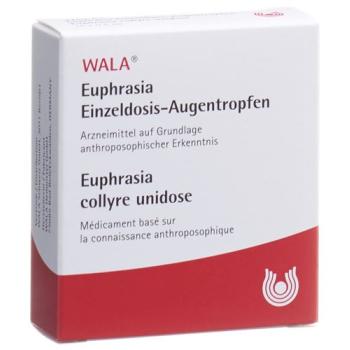 |
Wala Euphrasia eye drops 15 monodoseos 0.5 ml | 2495402 | 7680550430064 | - | Read more | |
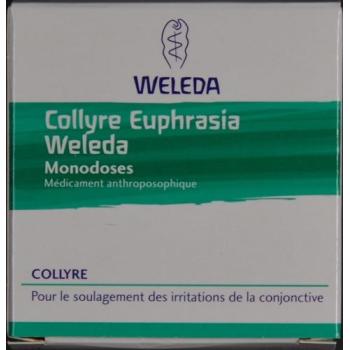 |
Weleda Euphrasia Augentropfen 20 Monodosen à 0.4 ml | 7767097 | 7680495370197 | - | Read more | |
 |
Optrex 300 ml Augenbad | 2010681 | 7680540710190 | - | Read more | |
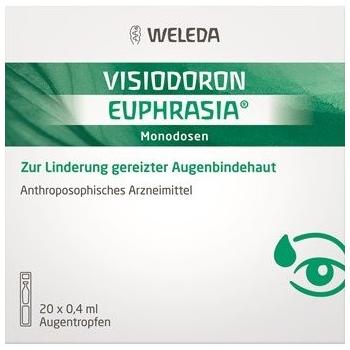 |
VISIODORON Euphrasia Eye Drops MD 20x0.4ml | 7836272 | 7680495370036 | - | Read more | |
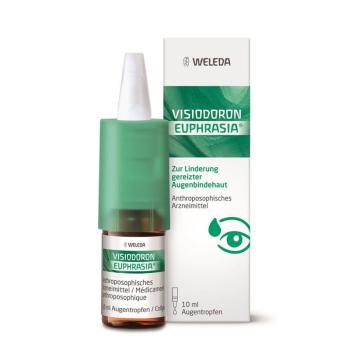 |
VISIODORON EUPHRASIA Eye Drops Opht | 7836271 | 7680495370029 | - | Read more | |
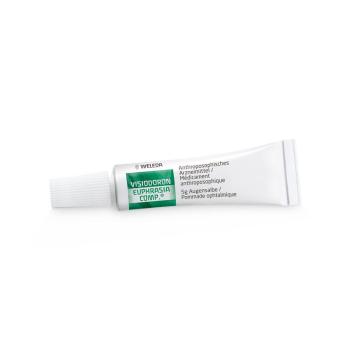 |
VISIODORON Euphrasi Comp. Eye Ointment Tb 5g | 1049032 | 7680688250015 | - | Read more |
Description - Weleda Euphrasia Eye Drops Bottle 10 ml
Swissmedic-approved patient information
Weleda Euphrasia ? eye drops
Anthroposophic medicinal product
AMZV
When are Weleda Euphrasia eye drops used?
According to anthroposophical knowledge of man and nature, Weleda Euphrasia -Eye drops can be used for irritation of the conjunctiva such as reddened, watery and tired eyes, swelling of the eyelid and a feeling of foreign bodies and dehydration. Weleda Euphrasia Eye Drops are made from the whole flowering plant eyebright (Euphrasia officinalis), which has been used medicinally for centuries to treat irritated eyes.
What should you watch out for?
If your doctor has prescribed other medicines for you, ask your doctor, pharmacist or druggist Druggist whether Weleda Euphrasia eye drops may be used at the same time.
When should Weleda Euphrasia eye drops not be used or only with caution?
If there is no improvement after 2-3 days, a doctor should be consulted. If it gets worse or if new symptoms appear, e.g. a decrease in visual acuity, a doctor must be consulted immediately. Do not use for glaucoma without medical supervision. Tell your doctor, pharmacist or druggist if you
- suffer from other diseases,
- have allergies or
- take other medicines (including those you bought yourself!) or use them externally.
How do you use Weleda Euphrasia eye drops?
Unless otherwise prescribed by the doctor, Weleda Euphrasia eye drops are used as follows: Children and adults: 1-2 drops into the conjunctival sac twice a day, preferably in the morning and evening. If necessary, 1 drop 3 times a day. For severely irritated eyes, 1 drop every 2 hours at most. Infants and small children (up to 2 years): 1 drop 2-3 times a day.
Application:


To distribute the drop, move your eye back and forth with your lid closed.
5. Put the protective cap back on the bottle tip immediately after use to avoid contamination.Follow the dosage given in the package leaflet or as prescribed by your doctor. If the desired improvement does not occur during the treatment of a small child/child, a doctor should be consulted with him or her. If you think the medicine is too weak or too strong, talk to your doctor, pharmacist or druggist.
What side effects can Weleda Euphrasia eye drops have?
Rarely does a temporary burning sensation occur in the eye after instilling Weleda Euphrasia eye drops. If you notice any side effects that are not described here, tell your doctor, pharmacist or druggist.
What else needs to be considered?
Do not use for longer than 3 months after opening. Weleda Euphrasia eye drops contain no preservatives. Note for contact lens wearers: Weleda Euphrasia eye drops are compatible with most standard contact lenses (soft and hard). Contact lenses should generally not be worn in acutely diseased eyes. Keep the medicine out of the reach of children. Store at room temperature (15-25°C) and away from moisture. The medicinal product may only be used up to the date marked ?EXP? on the container. Your doctor, pharmacist or druggist can provide you with further information.
What does Weleda Euphrasia eye drops contain?
1 g of dropper liquid contains: Eyebright D3 (whole fresh plant) 1 g. Excipients: sterile water, potassium nitrate, boric acid, sodium tetraborate.
Approval number
49537 (Swissmedic).
Where can you get Weleda Euphrasia eye drops? What packs are available?
Available in pharmacies and drugstores without a doctor's prescription. Drop bottle of 10 ml. Also available as 20 monodoses of 0.4 ml each.
Authorization holder
Weleda AG, Arlesheim, Switzerland.
This leaflet was last checked by the drug authority (Swissmedic) in March 2013.
26022600 / Index 1
Swissmedic-approved patient information
Weleda Euphrasia ? eye drops
Anthroposophic medicinal product
AMZVWhen are Weleda Euphrasia eye drops used?
According to anthroposophical knowledge of man and nature, Weleda Euphrasia -Eye drops can be used for irritation of the conjunctiva such as reddened, watery and tired eyes, swelling of the eyelid and a feeling of foreign bodies and dehydration. Weleda Euphrasia Eye Drops are made from the whole flowering plant eyebright (Euphrasia officinalis), which has been used medicinally for centuries to treat irritated eyes.
What should you pay attention to?
If your doctor has prescribed other medicines for you, ask your doctor, pharmacist or druggist Druggist whether Weleda Euphrasia eye drops may be used at the same time.
When should Weleda Euphrasia eye drops not be used or only with caution?
If there is no improvement after 2-3 days, a doctor should be consulted. If it gets worse or if new symptoms appear, e.g. a decrease in visual acuity, a doctor must be consulted immediately. Do not use for glaucoma without medical supervision. Tell your doctor, pharmacist or druggist if you
- suffer from other diseases,have allergies ortake other medicines (including those you bought yourself!) or use them externally.
How do you use Weleda Euphrasia eye drops?
Unless otherwise prescribed by the doctor, Weleda Euphrasia eye drops are used as follows: Children and adults: 1-2 drops into the conjunctival sac twice a day, preferably in the morning and evening. If necessary, 1 drop 3 times a day. For severely irritated eyes, 1 drop every 2 hours at most. Infants and small children (up to 2 years): 1 drop 2-3 times a day.
Application:
To distribute the drop, move your eye back and forth with your lid closed.
5. Put the protective cap back on the bottle tip immediately after use to avoid contamination.Follow the dosage given in the package leaflet or as prescribed by your doctor. If the desired improvement does not occur during the treatment of a small child/child, a doctor should be consulted with him or her. If you think the medicine is too weak or too strong, talk to your doctor, pharmacist or druggist.
What side effects can Weleda Euphrasia eye drops have?
Rarely does a temporary burning sensation occur in the eye after instilling Weleda Euphrasia eye drops. If you notice any side effects that are not described here, tell your doctor, pharmacist or druggist.
What else needs to be considered?
Do not use for longer than 3 months after opening. Weleda Euphrasia eye drops contain no preservatives. Note for contact lens wearers: Weleda Euphrasia eye drops are compatible with most standard contact lenses (soft and hard). Contact lenses should generally not be worn in acutely diseased eyes. Keep the medicine out of the reach of children. Store at room temperature (15-25°C) and away from moisture. The medicinal product may only be used up to the date marked ?EXP? on the container. Your doctor, pharmacist or druggist can provide you with further information.
What does Weleda Euphrasia eye drops contain?
1 g of dropper liquid contains: Eyebright D3 (whole fresh plant) 1 g. Excipients: sterile water, potassium nitrate, boric acid, sodium tetraborate.
Approval number
49537 (Swissmedic).
Where can you get Weleda Euphrasia eye drops? What packs are available?
Available in pharmacies and drugstores without a doctor's prescription. Drop bottle of 10 ml. Also available as 20 monodoses of 0.4 ml each.
Authorization holder
Weleda AG, Arlesheim, Switzerland. This leaflet was last checked by the drug authority (Swissmedic) in March 2013. 26022600 / Index 1