

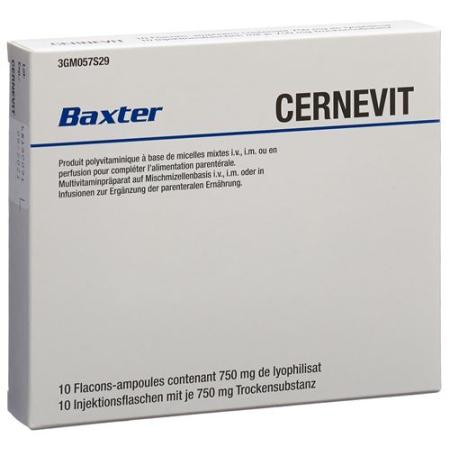
Cernevit Dry Sub Through 10 pcs
Cernevit Trockensub Durchstf 10 Stk
Send a request to get a price
In stock 13 pcsDescription - Cernevit Dry Sub Through 10 pcs
composition
active ingredientsRetinol (Vitamin A), Colecalciferol (Vitamin D 3 ), ?-Tocopherol (Vitamin E), Ascorbic Acid (Vitamin C), Thiamin (Vitamin B 1 ), Riboflavin (Vitamin B 2 ), Pyridoxine (Vitamin B 6 ), Cyanocobalamin ( Vitamin B 12 ), folic acid (vitamin B 9 ), pantothenic acid (vitamin B 5 ), biotin (vitamin B 8 ), nicotinamide (vitamin PP)excipientsGlycine, glycocholic acid, phospholipids from soybeans, sodium hydroxide or hydrochloric acid
Galenic form and amount of active ingredient per unit
powder, parenteral.1 injection bottle with 750 mg dry substance contains:
vitamin A, retinol(as retinol palmitate)3500 IU(1.925mg)vitamin D 3 , cholecalciferol220 IU0.0055mgVitamin E, ?-tocopherol(as DL ?-tocopherol)11.20 IU .(10.20mg)vitamin C, ascorbic acid125 mgvitamin B 1 , thiamine(as cocarboxylase 4 . H 2 O)3.51 mg(5.80mg)vitamin B 2 , riboflavin(as riboflavin-5-phosphate monosodium salt 2 . H 2 O)4.14 mg(5.67mg)vitamin B 6 , pyridoxine(as pyridoxine hydrochloride)4.53 mg(5.50mg)vitamin B 12 , cyanocobalamin0.006mgVitamin B9 , folic acid0.414 mgvitamin B 5 , pantothenic acid(as dexpanthenol)17.25 mg(16.15mg)vitamin B 8 , biotin0.069 mgVitamin PP, Nicotinamide46 mgglycine250 mgglycocholic acid140 mgPhospholipids from soybeans112.5 mgSodium hydroxide or hydrochloric acid for pH adjustmentup to pH 5.9 |
Indications/Possible Applications
?Restricted or difficult oral intake: esophageal stenosis and stenosis of the gastrointestinal tract, comatose states, persistent vomiting.?Contraindicated oral feeding: abdominal fistulas, severe cases of Crohn's disease and ulcerative colitis, certain preoperative and postoperative conditions.?Refused oral feeding: for example anorexia nervosa.?Inadequate oral nutrition: unbalanced diet, tumor cachexia, severe burns, short bowel syndrome.?Cernevit can also be administered as an additional source of vitamins in the case of partially restricted food intake.
Dosage/Application
Usual dosageAdults and children over 11 years: 1 vial per day intravenously or intramuscularly.Cernevit should be infused slowly (over at least 1-2 hours) intravenously (see section ? Warnings and precautions ?).Special dosage instructionsPatients with hepatic dysfunctionPatients with hepatic impairment may need individualized vitamin supplementation.
Particular attention should be paid to the prevention of vitamin A toxicity, as the presence of liver disease is associated with an increased susceptibility to vitamin A toxicity, particularly when combined with chronic excessive alcohol consumption (see also Hypervitaminosis A and Liver Effects in the section " Warnings/precautions ").Patients with renal dysfunctionPatients with impaired renal function may need vitamin supplementation individually, depending on the degree of renal impairment and overall condition. In patients with severe renal impairment, the focus is on maintaining adequate vitamin D levels and preventing vitamin A toxicity, which can develop in those patients with low-dose vitamin A supplementation or even no supplementation.Pyridoxine (vitamin B 6 ) hypervitaminosis and toxicity (peripheral neuropathy, involuntary movements) have been reported in patients on chronic hemodialysis administered intravenous multivitamins containing pyridoxine 4 mg three times per week .In conditions that require an increased supply of nutrients (severe burns, etc.), Cernevit can also be administered in two to three times higher doses (continuous drip).The patient's clinical status and vitamin levels should be monitored to ensure adequate vitamin levels.It should be taken into account that some vitamins, especially A, B 2 , and B 6 are sensitive to UV light (e.g. direct or indirect sun exposure). In addition, the loss of vitamins A, B 1 , C and E can increase with higher oxygen concentrations in the solution. These factors should be considered if adequate vitamin levels are not achieved.In general, dose adjustments should be considered for elderly patients (dose reduction and/or longer dosing intervals) because of the higher incidence of decreased hepatic, renal, or cardiac function and comorbidities or drug treatment.The safety and effectiveness of Cernevit has not been established in children under 11 years of age.
contraindications
?Do not administer concomitantly with other medicinal products containing vitamin A or D.? In order to avoid hypercalcaemic complications, Cernevit should not be used in patients with a pronounced allergic diathesis and in patients with hyperparathyroidism.?Hypersensitivity to any ingredient or soy protein/product.? Cernevit must not be given to infants under the age of 1 year as there is no experience in these patients.? Hypervitaminosis of a vitamin contained in Cernevit.
Warnings and Precautions
Severe systemic hypersensitivity reactions have been reported with Cernevit, other multivitamins and individual vitamins (including B1, B2, B12 and folic acid ) . Fatal reactions have been reported with Cernevit and other parenteral vitamin preparations (see Undesirable Effects section ).In some cases, the manifestations of a hypersensitivity reaction during intravenous administration of multivitamins can be attributed to the rate of infusion.The infusion or injection must be stopped immediately if signs or symptoms of a hypersensitivity reaction occur. The technical and personnel requirements for correct shock treatment must be in place.The quantity of vitamins present in Cernevit does not exactly correspond quantitatively to the needs of children under 11 years of age. Cernevit is therefore less suitable for this group of people.Cernevit contains lecithin from soybeans and should be used with caution in patients with peanut allergy due to possible cross-reaction.In the case of an existing vitamin K deficiency (increased tendency to bleed), vitamin K must be administered separately, since Cernevit does not contain any vitamin K.vitamin toxicityClinical status and blood vitamin levels should be monitored to avoid overdose and toxic effects, especially with vitamins A, D and E, and especially in patients receiving supplemental vitamins from other sources or other substances that may increase the risk of developing increase vitamin toxicity.Monitoring is particularly important in patients receiving long-term therapy.Hypervitaminosis AThe risk of hypervitaminosis A and vitamin A toxicity (e.g. skin and bone changes, double vision, cirrhosis) is increased with, for example:- protein malnutrition,- renal insufficiency (even in the absence of vitamin A supplementation),- liver dysfunction,- small body size (eg pediatric patients) and- chronic therapy.In patients with saturated vitamin A stores in the liver, vitamin A toxicity can manifest in acute liver disease.Refeeding syndrome in patients on parenteral nutritionRefeeding severely malnourished patients can lead to refeeding syndrome, which is characterized by intracellular shifts in potassium, phosphorus, and magnesium as the patient becomes anabolic. Thiamine deficiency and fluid retention can also develop. Careful monitoring and slowly increasing nutrient intake while avoiding overeating can prevent these complications.Precipitates in patients on
parenteral nutrition Pulmonary vascular precipitates have been reported in patients on parenteral nutrition. In some cases there was a fatal outcome. Excessive addition of calcium and phosphate increases the risk of formation of calcium phosphate precipitates. Precipitates were also observed in the absence of phosphate salts in the solution. Precipitate formation on the distal side of the in-line filter and precipitates suspected of having formed in the bloodstream have also been reported.In addition to checking the solution, the infusion set and catheter should also be checked periodically for precipitates.
If signs of respiratory distress occur, the infusion should be stopped and a medical evaluation initiated.Effects on the liverMonitoring of liver function parameters is recommended in patients receiving Cernevit. Particularly close monitoring is recommended in patients with hepatic jaundice or evidence of cholestasis.
Cases of liver enzyme elevations have been reported in patients receiving Cernevit, including isolated alanine aminotransferase (ALT) elevations in patients with inflammatory bowel disease (see Adverse Effects section ).In addition, increases in bile acid levels (total and individual bile acids, including glycocholic acid) have been reported in patients treated with Cernevit.Due to the glycocholic acid content, careful monitoring of liver function is required with repeated or long-term administration in patients with hepatic jaundice or in patients in whom laboratory parameters indicate cholestasis.General surveillanceClinical status and vitamin levels should be monitored in patients receiving parenteral multivitamins as the sole source of vitamins for prolonged periods. In particular, it is important to ensure adequate administration of the following vitamins:?Vitamin A in patients with bedsores, wounds, burns, short bowel syndrome or cystic fibrosis.?Vitamin B 1 in dialysis patients.?Vitamin B 2 in cancer patients.?Vitamin B 6 in patients with renal dysfunction.?Individual vitamins, the need for which may be increased due to interactions with other medicinal products (see « Interactions» ).The deficiency of one or more vitamins must be corrected by specific supplementation.Cernevit does not contain any vitamin K, which must be supplied separately if required.Patients with vitamin B 12 deficiencyEvaluation of vitamin B 12 status is recommended before starting Cernevit supplementation in patients at risk for vitamin B 12 deficiency and/or when Cernevit supplementation is planned for a few weeks.After a few days of administration, the amount of cyanocobalamin (vitamin B 12 ) and folic acid in Cernevit may be sufficient to cause increases in red blood cell, reticulocyte and hemoglobin counts in some patients with vitamin B 12 deficiency-associated megaloblastic anemia. This can mask a pre-existing vitamin B 12 deficiency. Effective treatment of vitamin B 12 deficiency requires higher doses of cyanocobalamin than those present in Cernevit.Folic acid supplementation in patients with vitamin B 12 deficiency who are not receiving vitamin B 12 does not prevent the development or progression of neurological manifestations of vitamin B 12 -associated deficiency. It is even suspected that neurological deterioration is accelerated.When interpreting the vitamin B 12 values, it should be noted that a recent intake of vitamin B 12 can lead to a normal vitamin B 12 level despite a deficiency in the tissue .sodium contentCernevit contains 24 mg sodium (1 mmol) per vial. This should be considered in patients on a sodium-controlled diet.Effects on clinical laboratory investigationsBiotin may interfere with laboratory tests based on an interaction between biotin and streptavidin, which may result in either falsely low or falsely high test results, depending on the test method. The risk of effects is increased in children and patients with renal insufficiency and increases with higher doses. When interpreting the results of laboratory tests, a possible impact of biotin must be considered, especially when discrepancies with the clinical picture are observed (e.g. results of thyroid tests that appear to be indicative of Graves' disease, in asymptomatic patients taking biotin or false negative troponin test results in heart attack patients taking biotin). If biotin interference is suspected, alternative assays not susceptible to biotin effects should be used, if available. Laboratory personnel should be consulted when requesting laboratory testing for patients taking biotin.
interactions
The following interactions between specific vitamins in Cernevit and other substances should be noted:?Substances that can cause pseudotumor cerebri (including certain tetracyclines): Increased risk of pseudotumor cerebri with additional administration of vitamin A.?Alcohol (chronic excess): Increases risk of vitamin A hepatotoxicity.? Antiseizure drugs (phenytoin, fosphenytoin, phenobarbital, primidone): Folic acid supplementation may decrease serum levels of antiseizure drugs and increase the risk of seizures.? Antiplatelet agents (such as aspirin): Vitamin E may help inhibit platelet function.?Aspirin (high dose therapy): May decrease folic acid levels through increased urine excretion.? Certain anticonvulsants (eg phenytoin, carbamazepine, phenobarbital, valproate): Can lead to folic acid, pyridoxine and vitamin D deficiencies.? Certain antiretroviral agents: Decreased vitamin D levels have been associated with, for example, efavirenz and zidovudine. Decreased formation of the active vitamin D metabolite has been associated with protease inhibitors.?Chloramphenicol: May inhibit the hematological response to vitamin B 12 therapy.? Deferoxamine: Increased risk of iron-induced heart failure due to increased mobilization of iron from increased physiological vitamin C supplementation. For special precautions, the prescribing information of deferoxamine should be consulted.?Ethionamide: May cause pyridoxine deficiency.?Fluoropyrimidines (5-fluorouracil, capecitabine, tegafur): increased cytotoxicity when combined with folic acid.?Folate antagonists eg methotrexate, sulfasalazine, pyrimethamine, triamterene, trimethoprim, and high doses of tea catechins: block the conversion of folic acid to its active metabolites and reduce the effectiveness of the supplement.?Folate antimetabolites (methotrexate, raltitrexed): Folic acid supplementation may reduce the effects of the antimetabolites.?Pyridoxine antagonists including cycloserine, hydralazine, isoniazid, penicillamine, phenelzine: May cause pyridoxine deficiency.? Retinoids, including bexarotene: Increased risk of toxicity when taken at the same time as vitamin A (see section " Warning and precautions : Hypervitaminosis A").? Theophylline: Can cause pyridoxine deficiency.? Tipranavir oral solution: Contains 116 IU/ml of vitamin E, which is more than the recommended daily dose.? Vitamin K antagonists (e.g. phenprocoumon): Increased anticoagulant effect due to vitamin E.?L-Dopa: Cernevit contains pyridoxine, which is why the effect of L-Dopa can be reduced.Substances that bind to alpha1-acid glycoprotein (AAG):These include propranolol, prazosin, and a variety of other substances. In an in vitro study using human serum, glycocholic acid concentrations approximately 4-fold higher than the serum glycocholic concentration after bolus injection of Cernevit in adults increased the unbound fraction of such drugs by 50 to 80%.It is not known whether this effect is clinically relevant when the amount of glycocholic acid contained in a standard Cernevit dose (as a component of the mixed micelles) is administered by slow intravenous injection, intramuscular injection or as an infusion over a prolonged period.
Patients receiving Cernevit and drugs that bind to alpha-1-acid glycoprotein should be monitored closely for increases in response to these drugs.Interactions with other vitamin supplementsSome drugs may interact with certain vitamins at doses significantly higher than those found in Cernevit. This should be considered in patients receiving vitamins from multiple sources and, where applicable, patients should be monitored for such interactions and treated accordingly.
pregnancy/breastfeeding
Vitamins can be taken in an amount that corresponds to the daily requirement. At daily doses such as those administered with Cernevit, neither controlled studies in animals nor in pregnant women are available. Although no adverse consequences are known to date, the drug should not be administered during pregnancy and breastfeeding unless it is clearly necessary.Cernevit contains vitamin A. It should be noted that a balanced diet meets or even exceeds the daily requirement of vitamin A (contained, for example, in liver, products containing liver, milk, milk products, margarine, eggs, cooking oil).There are data showing that taking higher doses of vitamin A (above 10,000 IU/day) during pregnancy may increase the risk of teratogenic harm.A daily dose of 10,000 IU of vitamin A should not be exceeded in pregnant women in the first trimester and in women who could become pregnant. This fact must be taken into account when taking Cernevit and large amounts of foods containing vitamin A at the same time.
Effect on the ability to drive and use machines
No dates are known.
unwanted effects
Adverse effects from clinical studies:The adverse reactions listed below are from three clinical trials of local and systemic tolerance of Cernevit in adult patients (N=267) requiring parenteral vitamin supplementation. In all three studies, Cernevit was administered intramuscularly over 5 days, as a slow intravenous injection over 5 days, and as an intravenous infusion over 10 days.Frequency has been classified into the following categories: very common (?1/10), common (?1/100 to 1/1,000 to Diseases of the gastrointestinal tractUncommon: vomiting, nauseaGeneral disorders and administration site conditionsCommon: pain at the injection/infusion siteThe following additional undesirable effects have been reported from several other clinical studies (various study designs and durations) with Cernevit as a component of parenteral nutrition:metabolism and nutritional disordersVery common (with daily administration over 3 months): increased retinol-binding protein, increased vitamin A (without clinical symptoms)Affections of the liver and gall-bladderVery common: bile acids increased, isolated alanine aminotransferase increasedCommon: Transaminases increased, blood alkaline phosphatase increased, glutamate dehydrogenase increasedAdverse effects from post-marketing experienceThe frequency of adverse reactions reported spontaneously from post-marketing experience cannot be estimated.diseases of the immune systemSystemic hypersensitivity reactions with manifestations such as shortness of breath, chest discomfort, throat tightness, urticaria, rash, erythema, epigastric discomfort and, in a few isolated cases, cardiac arrest with fatal outcome.Diseases of the nervous systemtaste disturbance (metallic taste in the mouth)heart diseasestachycardiaRespiratory, thoracic and mediastinal disorderstachypneaGastrointestinal disorders
DiarrheaSkin and subcutaneous tissue disorderspruritusAffections of the liver and gall-bladderGamma-glutamyltransferase increasedGeneral disorders and administration site conditionsFever, generalized pain, infusion site reactions such as burning, rash
overdose
Acute or chronic overdose with vitamins (particularly A, B 6 , D and E) can lead to symptomatic hypervitaminosis.Signs of Cernevit overdose are mostly due to the excessive intake of vitamin A.Symptoms of acute overdose of vitamin A (above 150,000 IU): gastrointestinal disorders, headache, increased intracranial pressure, papilledema, psychiatric disorders, drowsiness, convulsions, delayed generalized desquamation / peeling.The risk of overdose is particularly high when a patient is being given vitamins from multiple sources and the supplementation of a vitamin is inconsistent with the individual needs of the patient, and in patients with an increased susceptibility to hypervitaminosis (see section « Warnings and precautions ») .Symptoms of long-term vitamin A administration with high doses in patients without vitamin A deficiency:Increased intracranial pressure, cortical hyperostosis (cortical excessive bone formation) of the long bones and premature epiphyseal closure. Diagnosis is generally based on the presence of tender or painful subcutaneous swellings in the extremities. Radiographs show periosteal thickening of the diaphyses of the ulna, fibula, clavicles, and ribs.Symptoms of vitamin D hypervitaminosis: Ergocalciferol (vitamin D 2 ) and colecalciferol (vitamin D 3 ) increase calcium and phosphate absorption from the intestinal lumen and mobilize calcium from bone.Here, vitamin D is more antirachitic active, its reduction product DHT (dihydrotachysterol) is more effective in calcium mobilization from the bones. All of these substances have only a relatively small therapeutic index. The toxic threshold in adults is >0.5 mg/d for vitamin D and >0.25 mg/d for DHT. Single acute doses are usually not toxic.Treatment of vitamin overdoses usually consists of discontinuing vitamin administration and other measures as clinically indicated. (See also Interactions section ).
Properties/Effects
ATC code: B05XCCernevit contains all the vitamins essential for the metabolism that adults and children over the age of 11 need. The composition and amounts of each vitamin are in accordance with the recommendations of the American Medical Association, the Food and Drug Administration and the Food and Nutrition Board for parenteral nutrition.Thanks to the physiological solubilizer and the resulting good tolerability, Cernevit can be administered directly intravenously or intramuscularly.Cernevit supplements parenteral nutrient solutions and ensures the regulated intermediary metabolism of the parenterally supplied energy and building materials. Cernevit is well tolerated with the usual infusion solutions.
pharmacokinetics
There is no information.
Preclinical Data
Toxic effects on humans are not to be expected in physiological concentrations.acute toxicityAn LD 50 of 21 ml/kg was determined for Cernevit solution in mice after intravenous administration.Chronic ToxicityIn a study on chronic toxicity in dogs over 30 days, an approx. 3-fold therapeutic dose was tolerated without symptoms. The first signs of toxicity (lipomatosis of the bone marrow, slight increase in SGPT) occurred after a dose that was about 10 times the therapeutic dose, and increased cholesterol and phospholipid levels and a slight increase in alkaline phosphatase after a dose that was about 40 times the therapeutic dose.local toleranceThe local tolerability after intravenous administration in rabbits can be assessed as good. After intradermal and intramuscular injection, however, tissue damage occurred in the animal.Mutagenic and tumorigenic potentialStudies on the mutagenic or carcinogenic potential of Cernevit are not available.Under the conditions of clinical use, mutagenic and tumorigenic effects of retinol are not to be expected. The available literature does not provide any information about mutagenic or carcinogenic properties of vitamin B 12 . No mutagenic effects of folic acid are to be expected in physiological doses.Long-term studies on the tumorigenic potential are not available.reproductive toxicityEmbryotoxicity studies with Cernevit are not available. However, the carrier system ? the so-called mixed micelles (glycocholic acid + lecithin) ? was examined.Embryotoxicity studies in rats and rabbits gave no indication of a teratogenic potential.In rabbits, an approximately 10-fold therapeutic dose resulted in miscarriages. Administration of approximately 10 to 20 times the therapeutic dose in the peri/postnatal period resulted in increased mortality in the offspring in rats.There is no human experience with use during pregnancy and breast-feeding.In animal experiments, both vitamin A deficiency and vitamin A overdose have a teratogenic effect.In animal studies on reproductive toxicity, overdoses of colecalciferol during pregnancy in rats, mice and rabbits caused malformations (skeletal defects, microcephaly, cardiac malformations).The available literature does not provide any information about the reproductive-toxic properties of vitamin B 12 . Animal studies to clarify the reproductive-toxicological properties of folic acid are not available (see also " Warnings and precautionary measures" ).
Other Notes
incompatibilitiesCernevit may only be mixed with the preparations listed under Instructions for use.Influencing diagnostic methodsDepending on the reagents used, the presence of ascorbic acid in blood and urine can cause falsely high or low glucose readings on some urine and blood glucose testing systems, including test strips and glucose meters. The Technical Information for each laboratory test should be consulted to determine potential vitamin interactions.durabilityThe medicinal product may only be used up to the date marked ?EXP? on the container.Special storage instructionsDo not store above 25°C and do not freeze. Store away from light.Store medicines out of the reach of children.The undiluted, reconstituted solution has a shelf life of 24 hours at 5°C or 8 hours at a maximum of 25°C. As a diluted reconstituted solution, the shelf life is 8 hours at a maximum of 25°C. The infusion solution should be protected from light.For microbiological reasons, the ready-to-use preparation should be used immediately after dilution/reconstitution. Residual quantities are to be discarded.Instructions for handlingAseptic technique must be maintained during reconstitution and during admixture with parenteral nutrition.Cernevit as an additive to infusion solutions is prepared as follows: 5 ml of water for injection purposes are transferred to the Cernevit injection bottle using a syringe. Cernevit can also be dissolved in 5 ml glucose solution 5%, sodium chloride solution 0.9% or Ringer's solution. The lyophilizate dissolves with gentle swirling. The ready-to-use solution is yellow-orange to orange in colour.Cernevit can be added to infusion solutions such as sodium chloride 0.9%, glucose solution 5% or Ringer's solution.The ready-to-use solution can be mixed with common nutritional solutions such as Numeta Neo/Ped and Olimel/PeriOlimel.
From a microbiological point of view, if not used immediately, in-use storage times and conditions prior to use are the responsibility of the user and would normally not be longer than 24 hours at 2 to 8°C, unless reconstitution has taken place under controlled and validated aseptic conditions.For intramuscular injection, the lyophilisate of the injection vial is reconstituted with 2.5 ml of water for injections in the same way as described above.Cernevit must be fully dissolved prior to transfer from the vial.Parenteral medicinal products should be checked visually. If visible changes such as discoloration, turbidity or precipitation occur when mixed with infusion solutions, the mixture should be discarded.If Cernevit is added as an admixture to a parenteral nutrient solution, the final solution must be fully mixed. Any unused residue of the reconstituted Cernevit solution should be discarded and not used for later admixture.The use of a terminal filter is recommended during the administration of all parenteral nutrition solutionsIn principle, Cernevit should not be administered simultaneously with other drugs unless their compatibility with Cernevit has been expressly proven.
registration number
47,953 (Swissmedics)
Marketing Authorization Holder
Baxter AG, 8152 Opfikon