

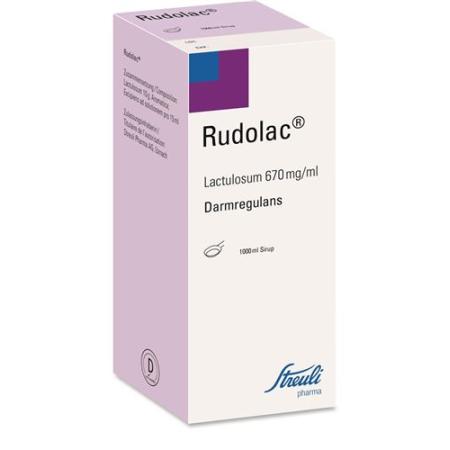
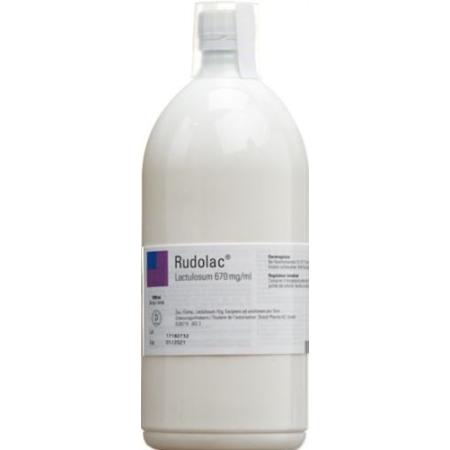
Rudolac syrup in bottle 1000 ml
Rudolac Sirup In Flasche 1000мл
Send a request to get a price
Not availableAnalogues of the product based on the Anatomical Therapeutic Chemical (ATC) Classification - A06AD11
| Name | Code | EAN | Price | Original | ||
|---|---|---|---|---|---|---|
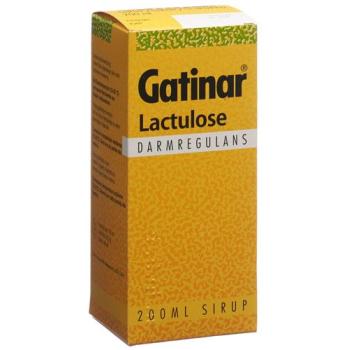 |
Gatinar Syrup 200ml | 1435970 | 7680375850412 | - | Read more | |
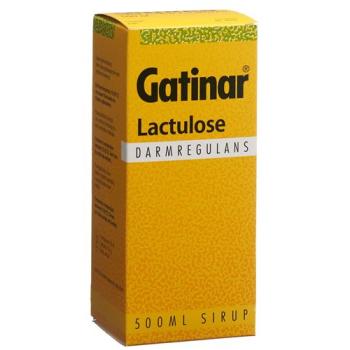 |
Gatinar Syrup 500ml | 1278631 | 7680375850252 | - | Read more | |
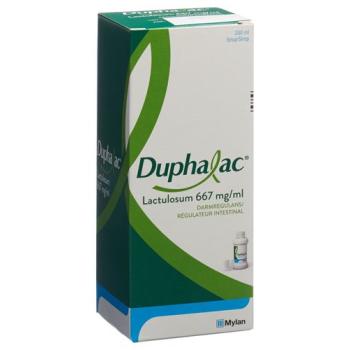 |
Duphalac syrup bottle 200 ml | 5628973 | 7680328942003 | - | Read more | |
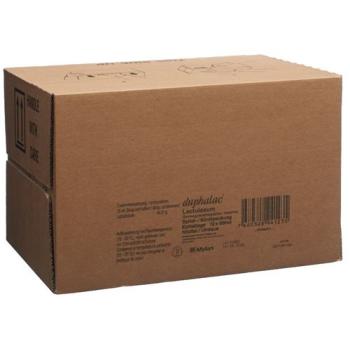 |
Duphalac syrup 12 bottles 500 ml | 5629010 | 7680328941235 | - | Read more | |
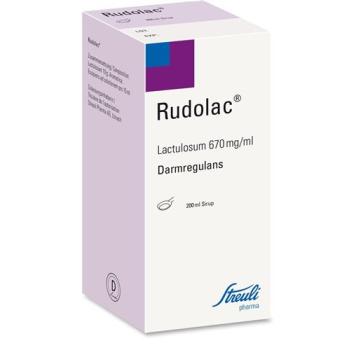 |
Rudolac syrup in bottle 200 ml | 6477298 | 7680510670059 | - | Read more | |
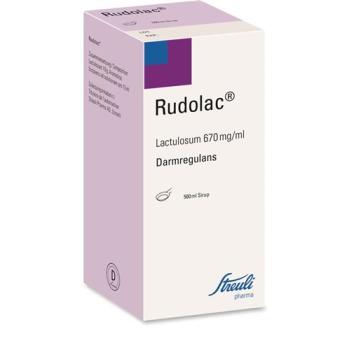 |
Rudolac syrup in bottle 500 ml | 6477312 | 7680510670042 | - | Read more |
Description - Rudolac syrup in bottle 1000 ml
AMZV
What is Rudolac and when is it used?
Lactulose, the active ingredient in Rudolac, is an artificial sugar that has a laxative effect.
Lactulose is not broken down in the small intestine and is not absorbed into the body, which makes the stool softer. It is only in the large intestine that the lactulose is broken down by the intestinal flora into organic acids (lactic acid, acetic acid), which stimulate intestinal activity together with the increase in volume and thus make it possible to maintain a soft stool.
Rudolac is taken for constipation, i.e. if you have problems with emptying your stool. It may be that there is no evacuation at all or the stools are hard and small.Rudolac helps to soften the stool and bring about a normal evacuation.We also recommend that you adjust your daily habits as well. Below is some practical advice that may help you.
Except for constipation, the preparation can be given on doctor's prescription for certain liver diseases.
What needs to be considered?
The following advice can help you to change the bad habits that are often the cause of constipation:
- Regular physical activity.
- Drink enough, at least 1.5 liters of water daily.Never skip a meal or start a diet until your bowels are working properly again.Start the day with a good breakfast: whole grain bread, fruit, coffee (not strong tea), yogurt.Don't hold back a bowel movement if you feel it.Never take a laxative for a long time without asking your doctor.Preferably eat unpeeled fruit, raw vegetables, nuts, figs, dried plums, wholemeal bread, rye bread, whey, yoghurt.Eat calmly and chew every bite carefully.Avoid toast, white bread, rusks, strong tea, bananas, white rice, hard-boiled eggs.
For diabetics
15 ml of Rudolac syrup contain a maximum of 2.1 g ver valuable carbohydrates corresponding to 10.2 kcal or 42.7 kJ, corresponding to 0.21 BE.
Rudolac can also be taken by diabetic patients in normal doses.
When should Rudolac not be used?
People who have to follow a galactose- or lactose-free diet should not take Rudolac.
In diseases of the gastrointestinal tract the doctor must be consulted before the preparation is administered.
If you are hypersensitive to Rudolac, you must stop taking the syrup.
When should caution be taken when taking Rudolac?
Blowing that occurs at the beginning of treatment should not alarm you, as it is only temporary and indicates that the preparation is working.
If after a few days you notice that the stools are too liquid should reduce the dose.As a precautionary measure, the doctor should be consulted before each use of a laxative in children under the age of 6.Inform your doctor, pharmacist or druggist if you suffer from other illnesses, have allergies or are taking other medicines (including those you have bought!) or use them externally!
May Rudolac be used during pregnancy or be used while breastfeeding?
In principle, drugs should be avoided during pregnancy and breastfeeding.
Due to the properties and mechanisms of action of lactulose, it can be concluded that taking Rudolac during pregnancy and breastfeeding is harmless.
How do you use Rudolac?
The Rudolac dosage depends on age, the severity of the constipation, but also on how long you have been suffering from constipation. p>Adults (depending on the severity of the condition): In deTake 10-20 g/day (15-30 ml) for the first few days. After these days and when the constipation improves, the daily dose can be reduced to 7-10 g/day (10-15 ml).Rudolac can be diluted with a little water or fruit juice, taken with milk, coffee, yoghurt and compote.Elderly people: Take 3-7 g (4-10 ml) two to three times a day.Children: 0.2-0.4 g /kg body weight three to four times a day.
In children under 6 years of age, Rudolac should only be used if prescribed by a doctor.
Higher doses may be used for certain liver diseases if prescribed by a doctor.
In general, the onset of action takes 1-2 days, so do not increase the prescribed dosage if you do not see relief.
Rudolac should not be used for more than 2- use for 3 weeks. If the clinical picture has not improved by then, you must consult a doctor.
Rudolac in a bottle
The dose can be measured exactly using the enclosed dosing cup (2.5 to 30 ml).
Rudolac in a sachet
Each sachet contains 15 ml of syrup. Since the bags are offered without a measuring cup, an exact dosage according to the above dosage for children is not possible. They should therefore be used primarily in adults.
Stick to the dosage given in the package insert or prescribed by your doctor. If you think the medicine is too weak or too strong, talk to your doctor, pharmacist or druggist.
What side effects can Rudolac have?
Occasionally, especially at the beginning of treatment, flatulence, abdominal pain and abdominal cramps can occur. With high doses, prolonged or too frequent use, nausea, vomiting, diarrhea with loss of water and disturbances in the mineral balance (including potassium loss) can occur.If you notice any side effects that are not described here, you should inform your doctor, pharmacist or druggist.
What else needs to be considered?
Keep the medicine out of the reach of children.The medicine may only be kept up to Use the date marked «EXP» on the container.Store at room temperature (15-25 °C). Do not freeze syrup and protect from sunlight.Your doctor, pharmacist or druggist can provide you with further information. These people have the detailed technical information.
What does Rudolac contain?Active substance
15 ml Rudolac syrup contain 10 g lactulose.
Excipients:
Bottles: None, but small amounts of other sugars such as lactose, galactose , epilactose and fructose may be present.sachet: plum flavor; no other excipients, but small amounts of other sugars such as lactose, galactose, epilactose and fructose may be present.15 ml Rudolac syrup contain a maximum of 2.1 g usable carbohydrates corresponding to 10.2 kcal or 42.7 kJ, corresponding to 0.21 BE.
Authorization number
51067 (Swissmedic).
Where can you get Rudolac? What packs are available?
In pharmacies and drugstores, without a doctor?s prescription.
Rudolac, syrup in bottles: 200, 500 and 1000 ml.
Rudolac, syrup in sachets: 10× 15 ml and 20× 15 ml
Authorization holder
Streuli Pharma AG, 8730 Uznach.This leaflet was last checked by the drug authority (Swissmedic) in June 2015.