

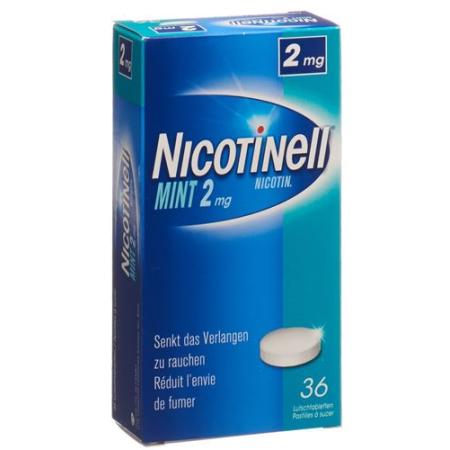
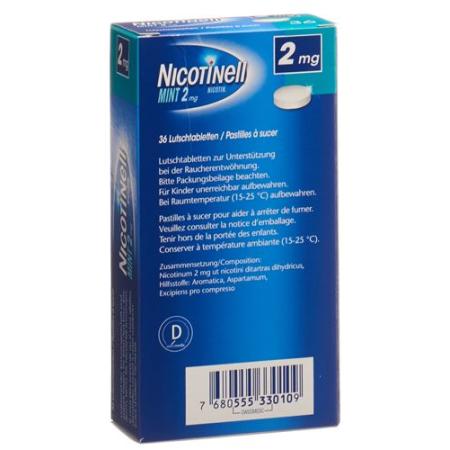
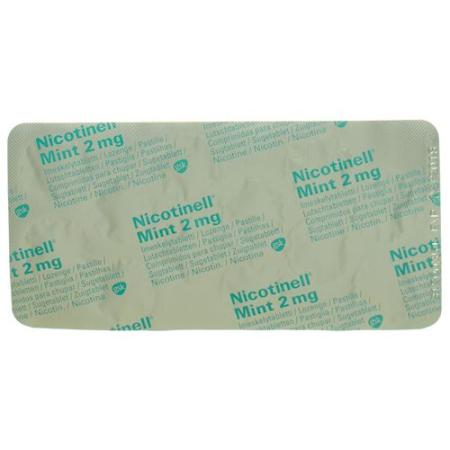
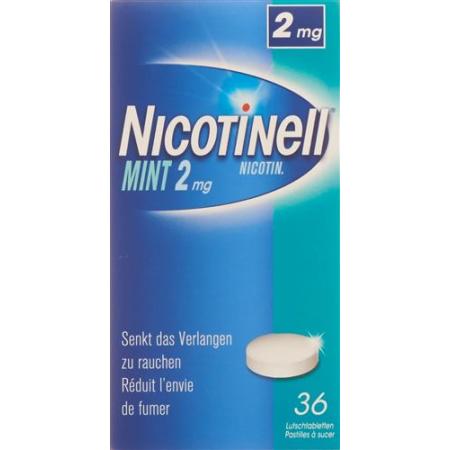
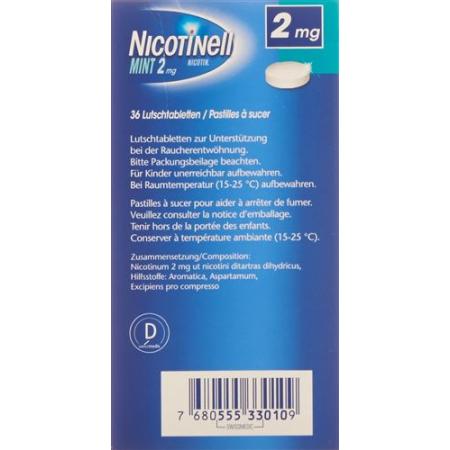
Nicotinell lozenges 2 mg mint 36 pieces
Nicotinell 2 mg 36 Pastillen
Send a request to get a price
In stock 43 pcsAnalogues of the product based on the Anatomical Therapeutic Chemical (ATC) Classification - N07BA01
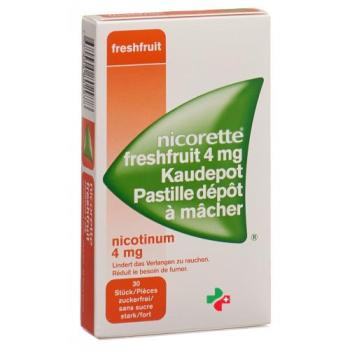
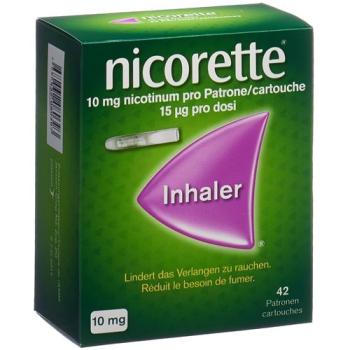
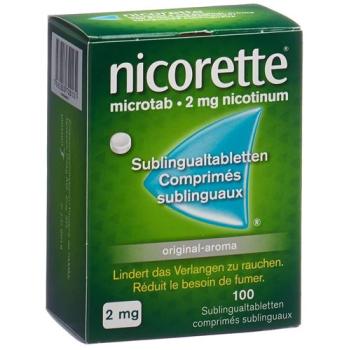
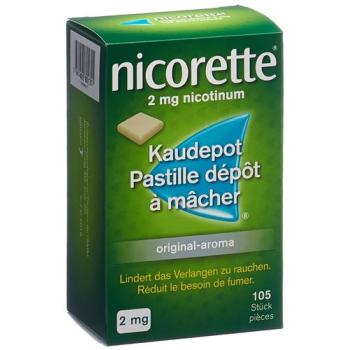
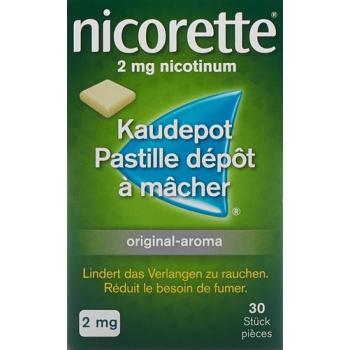
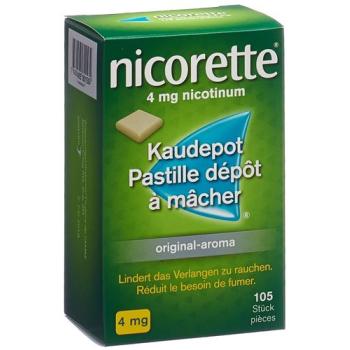
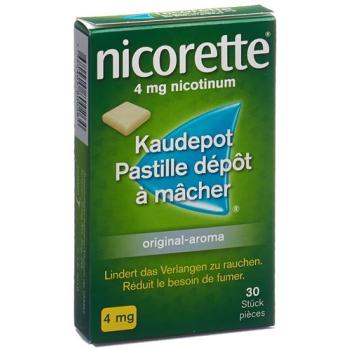
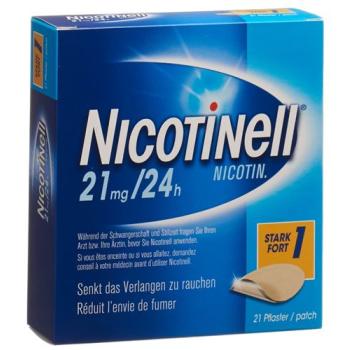
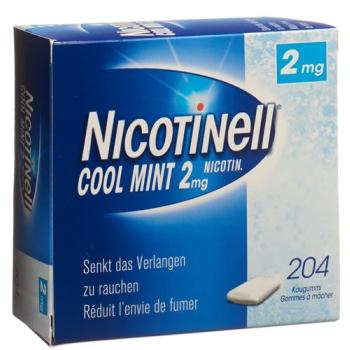
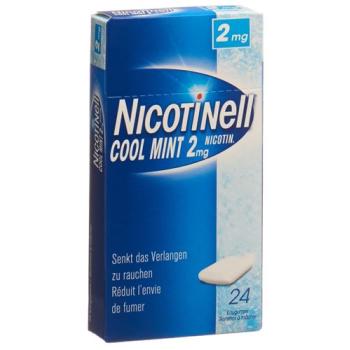
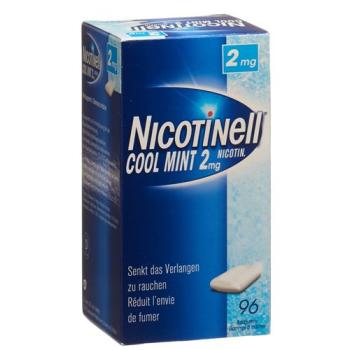
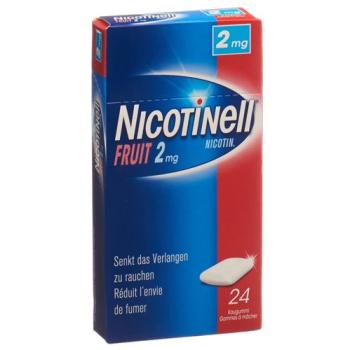
Description - Nicotinell lozenges 2 mg mint 36 pieces
What are Nicotinell lozenges and when are they used?
Nicotinell lozenges are lozenges containing nicotine. They are recommended as a support if you want to quit smoking or reduce cigarette consumption as a first step.When using the lozenges, nicotine is released for about 30 minutes. Nicotine is the addictive component in tobacco smoke and is responsible for the various withdrawal symptoms associated with smoking cessation. By administering nicotine with Nicotinell, these withdrawal symptoms are reduced and it is easier for smokers to give up cigarette nicotine.
After a while, experience has shown that if you have acquired new habits (substitute acts for smoking), it will be easier for you to gradually get by with fewer Nicotinell lozenges and later to stop using them altogether.
Damage to health caused by the tar and carbon monoxide content in tobacco smoke is avoided .
What should be considered?
Your motivation and willpower are decisive for the success of the treatment.
If you use Nicotinell lozenges as part of a cessation cure, you should stop smoking completely, as if you continue smoking unabated, there is a risk of side effects, including for the heart and circulatory system, due to a higher nicotine level than with normal smoking.
It is therefore important that you are strongly motivated to quit smoking before you start Nicotinell treatment. Professional smoking advice increases the chances of quitting successfully.
Nicotinell lozenges are not stimulants. It may take a few days to get used to the taste of Nicotinell lozenges.Nicotinell lozenges are sweetened with aspartame and maltitol. That is why Nicotinell lozenges can also be used by diabetics, taking the necessary precautions into account (see «When should you be careful when using Nicotinell lozenges?»).If you use Nicotinell lozenges to reduce cigarette consumption, make sure that you only use the lozenges when you are not smoking. There is a risk of damage to the oral mucosa with long-term use.
When should Nicotinell lozenges not be used?
Nicotinell lozenges should not be used in the following cases:
- If you have a known hypersensitivity to nicotine or one of the excipients according to the composition.During pregnancy and breastfeeding (see "Can Nicotinell lozenges be used during pregnancy or breastfeeding time?».Nicotinell lozenges should not be used by children under the age of 12! For adolescents under 18 years and over 12 years of age, the drug should only be used if they are heavily dependent on nicotine and only after consulting a doctor.
When should caution be exercised when using Nicotinell lozenges?
If you have health problems, suffer from chronic diseases of the throat or one of the following diseases, then you should before you start of the Nicotinell treatment program, carefully discuss the benefits and risks with your doctor:
- Diabetes mellitus: when you start nicotine replacement therapy, you should check your blood sugar levels more frequently than usual, as blood sugar levels can fluctuate more. The drug therapy may have to be adjusted;Cardiovascular diseases such as stable angina pectoris, recent heart attack, cardiac arrhythmia, heart diseaseInsufficiency (heart failure), high blood pressure, circulatory disorders in the arms and legs (e.g. smoker's leg), diseases of the blood vessels, stroke;Kidney and liver diseases;Hyperthyroidism, pheochromocytoma (adrenaline-producing tumor of the adrenal gland);Inflammation of the gastric mucosa or stomach and intestinal ulcers, inflamed esophagus. Nicotine replacement therapy may worsen symptoms;Epilepsy if you have a history of seizures.
Smoking addicts immediately (less than 4 weeks) after a heart attack, severe irregular heartbeat or recent stroke should only use Nicotinell lozenges under medical supervision. In these cases, the use of the preparation should only be considered if smoking cessation is not possible without the support of medication. When developing new or deterioration of existing symptoms on the part of the cardiovascular (chest pain, irregular pulse, shortness of breath), a doctor is to be visited.
This medicine can affect the reaction, the ability to travel and the ability to use tools or machines. 51): This medicine contains 10 mg aspartame per lollow tablet. Aspartame is a source of phenylalanine. It can be harmful if you have phenylketonuria (PKU), a rare inherited disorder in which phenylalanine builds up because the body cannot break it down sufficiently.
Maltitol (E 965):
This medicine contains maltitol. Please only take Nicotinell lozenges after consulting your doctor if you know that you suffer from a sugar intolerance. May have a slight laxative effect.Inform your doctor, pharmacist or druggist if you
- suffer from other diseases,have allergies oruse other medicines (including those you bought yourself!).
Important interactions with other medicines
Stop smoking ung, with or without nicotine replacement such as Nicotinell lozenges, can change the response to concomitant medicines such as asthma, cardiac arrhythmia, severe pain, mood disorders, Alzheimer's disease, Parkinson's disease, restless leg syndrome or diabetes (insulin). If necessary, your doctor will prescribe an adjustment of the dose of the affected medicines.
Can Nicotinell lozenges be used during pregnancy or breast-feeding?Pregnancy
If you are pregnant, you should try to stop smoking without taking any medicines.Nicotine in any form can harm the unborn child.Nicotine in any form should not be used during pregnancy , not even with Nicotinell lozenges. Nicotine, and smoking in particular, can seriously endanger the health of the fetus and infant and should be stopped during pregnancy.Talk to your doctor about how to quit smoking during this period.
Breastfeeding
Nicotine passes into breast milk.Nicotinell lozenges should not be used while breastfeeding, nor should any other form of nicotine be used or breastfeeding should be avoided and the baby switched to bottle feeding.
How do you use Nicotinell lozenges?Nicotinell lozenges are best for adults over 18 years of ageright.
For adolescents under the age of 18 and over 12, the preparation should only be used if they are heavily dependent on nicotine and only after consulting a doctor (see also «When should Nicotinell lozenges not be used?»).
If you are heavily dependent on nicotine, i.e. have your first cigarette within 20 minutes of getting up and smoke more than 20 cigarettes a day, start treatment with Nicotinell 2 mg lozenges. In the case of weak to moderate nicotine dependency, Nicotinell 1 mg lozenges are usually sufficient.No more than 15 Nicotinell lozenges should be sucked per day. Do not use more than 1 lozenge per hour.
Method of administration
If you feel like smoking, slowly suck a Nicotinell lozenge for about 30 minutes. Periodically move the lozenge from side to side of the mouth until it is completely dissolved. Take regular breaks and let the released nicotine act on the oral mucosa.
Do not chew the lozenge or swallow it whole.
Do not eat or drink while the lozenge is in your mouth. Avoid consuming any beverages immediately before and during sucking as this will greatly reduce exposure to the nicotine released.
Quiting
For most smokers, 8 to 12 lozenges of the appropriate strength per day are usually sufficient. No more than 15 Nicotinell lozenges should be sucked per day. Do not use more than 1 lozenge per hour.After 8 weeks, it is time to gradually reduce the nicotine intake into the body. For the next 2 weeks, reduce the number of lozenges per day by half. Stop treatment after the next 2 weeks if you managed to get the dose down to zero on the last day. The duration of treatment is individual, but is a maximum of 3 months.
Reduction in cigarette consumption
The lozenges are used during the smoke-free intervals in order to extend them as long as possible and thus reduce cigarette consumption as much as possible. Never use the lozenges and smoke at the same time or use lozenges and smoke in direct succession without a break. If you have not achieved a significant reduction in daily cigarette consumption after 6 weeks, you should seek advice from your doctor.You should try to quit smoking as soon as you feel ready, but no later than 6 months after starting treatment. If you are still unable to stop smoking 9 months after starting treatment, you should consult your doctor.
The recommended duration of treatment with Nicotinell lozenges is a maximum of 12 months.
Unused lozenges should be kept, as the craving to smoke can suddenly come back.
Stick to the dose given in the package leaflet or prescribed by your doctor. If you think the medicine is too weak or too strong, talk to your doctor, pharmacist or druggist.
What side effects can Nicotinell lozenges have?
The following side effects can occur when using Nicotinell lozenges:Most side effects occur during the first few weeks after starting Nicotinell treatment. In many cases, incorrect sucking technique is the reason.At the beginning of Nicotinell treatment, the oral mucosa may become somewhat irritated, or hiccups and nausea caused by sucking too quickly may occur. In these cases, take a break immediately and leave the lozengeLet rest in a cheek pouch for 1 to 2 minutes. The delivery of nicotine is thus interrupted and the irritation quickly subsides. Then suck again very slowly with further pauses.
Very common (affects more than 1 in 10 people treated): headache, gastrointestinal problems, hiccups, nausea, inflammation of the mouth and throat, pain in the masticatory muscles.
Common (affects 1 to 10 in 100 people treated): dizziness, sore throat, pain in the throat area, cough, vomiting, indigestion, abdominal pain, case, dry mouth, constipation, flatulence, inflammation of the oral mucosa (stomatitis).
Uncommon (affects 1 to 10 in 1,000 people treated): palpitations, tachycardia and reddening of the skin, hives and abnormal sensations in the skin area.
Rare (affects 1 to 10 in 10,000 people treated): allergic reactions, swelling of the face/neck, Trembling, shortness of breath, difficulty swallowing, belching, increased salivation, blistering of the oral mucosa, weakness, tiredness, feeling unwell, flu-like symptoms.
Very rare (affects less than 1 in 10,000 people treated): cardiac arrhythmia.
Certain side effects such as aphthae, dizziness, headache and insomnia can also be caused by the withdrawal symptoms that occur as part of smoking cessation
Persistent nicotine dependency may occur.
Overdose
An overdose can occur if several lozenges are mistakenly sucked at the same time or in quick succession, or if people smoke at the same time. In the event of an overdose, the symptoms correspond to those of acute nicotine poisoning.
The following occur: nausea, salivation, abdominal pain, vomiting, diarrhea, hearing and vision disorders, headaches, tremors, tachycardia, sweating, hypothermia, dizziness, confusion, paleness and pronounced weakness. In extreme cases, this can result in: cramps, drop in blood pressure, weak, irregular pulse, respiratory failure and fainting, circulatory collapse.
In the event of an overdose or suspected overdose, the nicotine supply must be stopped immediately. Consult a doctor immediately. Even small amounts of nicotine are dangerous for children and can lead to severe symptoms of poisoning, which can be fatal. If you suspect nicotine poisoning in children, you must seek emergency medical help.If you notice any side effects, contact your doctor, pharmacist or druggist. This also applies in particular to side effects that are not listed in this leaflet.
What else must be observed?Special warning for children
Keep medicines out of the reach of children. Nicotine is a highly toxic substance. Even the dose that adults can tolerate during treatment can lead to life-threatening symptoms of poisoning in children, possibly with a fatal outcome.
Therefore, Nicotinell lozenges must be kept out of the reach of children and/or disposed of at all times.
Shelf life
The medicinal product may only be used up to the date marked «EXP» on the container.
Storage instructions
At room temperature (15-2 5°C).
Keep out of the reach of children.
Further information
Your doctor, pharmacist or druggist can provide you with further information. These people have the detailed technical information.
What does Nicotinell lozenges contain?Active substance
1 Nicotinell Mint 1 mg lozenge contains: 1 mg nicotine (as ditartrate dihydrate)1 lozengelette Nicotinell Mint 2 mg contains: 2 mg nicotine (as ditartrate dihydrate)
Excipients
Maltitol (E 965) (equivalent to 2 kcal per lozenge), aspartame (E 951), polyacrylate dispersion 30%, xanthan gum, anhydrous sodium carbonate, sodium hydrogen carbonate, magnesium stearate, colloidal silicon dioxide, peppermint oil, Levoment hol.
Authorization number
55533 (Swissmedic).
Where can you get Nicotinell lozenges? What packs are available?
In pharmacies and drugstores, without a doctor's prescription.
Nicotinell Mint 1 mg lozenges: packs of 36, 96 and 204 lozenges.
Nicotinell Mint 2 mg lozenges: packs of 36, 96 and 204 lozenges.
Marketing Authorization Holder
GSK Consumer Healthcare Schweiz AG, Risch.This leaflet was last checked by the drug authority (Swissmedic) in June 2021.