

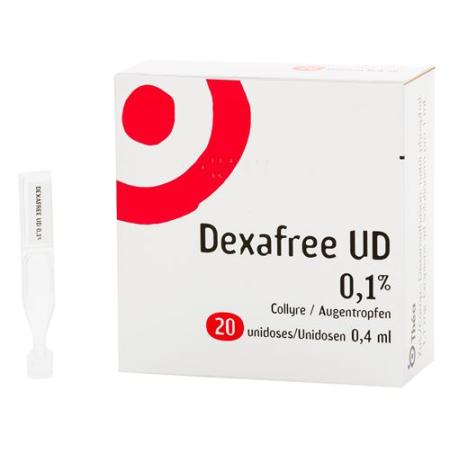
Dexafree UD Gtt Opht 0.1% 20 Monodos 0.4ml
Dexafree Ud 0.1% Augentropfen 20 Monodosis 0.4 ml
Send a request to get a price
In stock 1000 pcsAnalogues of the product based on the active ingredient
![Acular Gtt Opht Fl 5 ml [!]](https://www.primecare.global/storage/cache/350x350_1800151_500_91128.jpg)
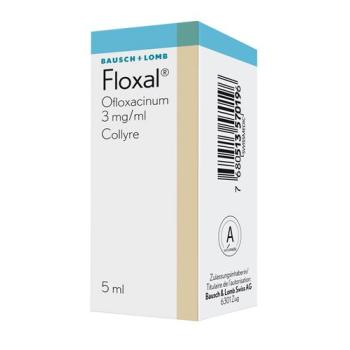
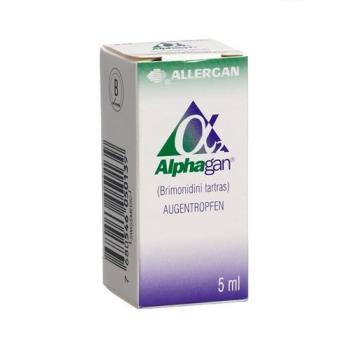
Analogues of the product based on the Anatomical Therapeutic Chemical (ATC) Classification - S01BA01
| Name | Code | EAN | Price | Original | ||
|---|---|---|---|---|---|---|
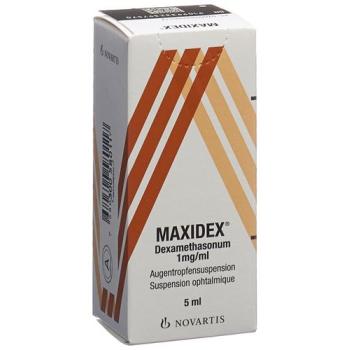 |
Maxidex Susp Opht dropper bottle 5 ml | 315270 | 7680300580117 | - | Read more | |
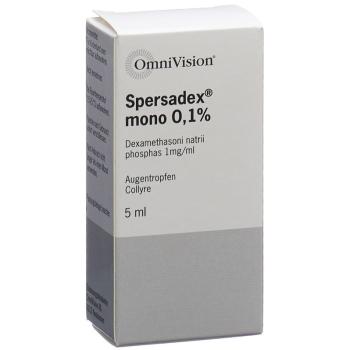 |
Spersadex mono Gtt Opht 0.1% Fl 5 ml | 3023088 | 7680310690257 | - | Read more | |
![Ozurdex intravitreal implant in applicator [!]](https://www.primecare.global/assets/img/no-image.jpg) |
Ozurdex intravitreal implant in applicator [!] | 4830129 | 7680603240015 | - | Read more |
Description - Dexafree UD Gtt Opht 0.1% 20 Monodos 0.4ml
What is Dexafree and when is it used?
Prescriptened by your doctor.Dexafree are eye drops that contain dexamethasone sodium phosphate (1 mg / ml). This active ingredient is a corticosteroid that works to reduce the symptoms of inflammation. They are indicated for non-infectious inflammatory reactions in the anterior segment of the eye that require corticosteroid treatment.
What precautions should be taken?
Your doctor has prescribed this medicine to you to treat the current eye problems. Do not use it to treat other illnesses or anyone else on its own.
Notes for contact lens wearers
Wearing contact lenses is generally not indicated for allergic or inflammatory eye complaints. You can wear your contact lenses again when the inflammatory manifestations have subsided.However, if you cannot do without contact lenses, take them out and do not put them back in until 15 minutes after you have instilled the Dexafree eye drops.
When should Dexafree not be used?
Do not use the Dexafree eye drops if you
- eye infections that are not treated with an anti-infectious agent, such as acute purulent bacterial diseases, fungal or viral infections;from superficial keratitis as a result of vaccination reactions, herpes simplex virus, herpes zoster, and most other corneal infections;from tuberculosis;suffer from conditions such as glaucoma, external corneal ulcers or lesions.
This medicinal product must not be used if you are known to be allergic to dexamethasone or if you are known or suspected of being hypersensitive (allergic) to any of the ingredients in Dexafree.
When should caution be required when using Dexafree?
If you have high eye pressure or problems with your vision, your doctor or health care professional will check your eye pressure regularly, especially if you need long-term treatment with Dexafree.If you are using other eye drops at the same time, wait 15 minutes between each instillation.Wash your hands well before using the eye drops; make sure that the dropper tip does not come into contact with the eye and eyelids.As the occurrence of systemic reactions cannot be excluded, the use of these eye drops in newborns and children under 2 years of age, as well as in people with high blood pressure, is not recommended.This medicine contains 80 micrograms of phosphates per drop. If you have severe damage to the cornea (the transparent layer on the front of the eye), phosphates may very rarely cause clouding (cloudy spots) of the cornea due to calcium build-up during treatment.Talk to your doctor or health care professional if you have swelling and weight gain on your trunk or face, as these are usually the first signs of what is known as Cushing's syndrome. Stopping long-term or high-dose treatment with Dexafree may lead to suppression of adrenal function. Talk to your doctor before you stop the treatment on your own. These risks should be considered especially in children and patients treated with a drug containing ritonavir or cobicistat.If you experience blurred vision or other visual disturbances, contact your doctor or health care professional.Tell your doctor or health care professional if you are using ritonavir or cobicistat, as these can increase the amount of dexamethasone in your blood.To date, there is no information that the use of Dexafree will affect the ability to drive or use machines. However, because vision may be blurred after using Dexafree, you should not drive or use machines until you can see clearly again.Tell your doctor or pharmacist if you
- suffer from other diseases,have allergies ortake other drugs (including those you bought yourself!) or use them externally or instill other eye drops!
Can Dexafree be used during pregnancy or while breastfeeding?
Talk to your doctor if you are pregnant or want to become pregnant. Your doctor will decide whether you can use Dexafree.Do not use Dexafree if you are breast-feeding. If you want to breastfeed your child, consult your doctor or health care professional.
How do you use Dexafree?
The usual dosage is 1 drop in the inflamed eye 4-6 times a day. In severe cases, treatment can be started with 1 drop every hour, gradually lengthening the intervals between each instillation to avoid relapse.The duration of treatment varies from a few days to a maximum of 14 days.Stick to the dosage prescribed by your doctor or health care professional.
Instructions for use
- Wash your hands well before instilling the eye drops.Tilt your head back and look up.With the index finger of your free hand, gently pull the lower eyelid downwards.Gently trickle a drop into the conjunctival sac.Make sure that the dropper tip of the single-dose container does not come into contact with the eyes and eyelids.
If you briefly press the tear duct immediately after the instillation or close your eyes for 3 minutes, the medicine will remain in the eye to be treated, which will reduce the risk of a systemic reaction.The single-dose container must be thrown away after use.If you've put in too many drops and the irritation persists, wash your eye out with sterile water.If you forget a dose, do not take a double dose for the next instillation.Do not change the prescribed dosage on your own. If you think that the medicine is too weak or too strong, talk to your doctor or pharmacist.
What side effects can Dexafree have?
Using Dexafree can cause the following side effects:
LocalCommon (affects 1 to 10 users in 100)
- An increase in pressure inside the eye, which could cause glaucoma;an uncomfortable feeling of irritation, burning, tingling, and / or blurred vision; these are light and temporary;a secondary infection in the eye;a clouding of the lens (cataracts).
Rare (affects 1 to 10 in 10,000 users)
- allergic and hypersensitivity reactions to any of the ingredients in the eye drops;inflammation of the iris, dilation of the pupil, a prolapse of the lower eyelid, calcification of the cornea, inflammation and / or thickening of the cornea, edema of the face, conjunctivitis, corneal edema, or an abscess;a corneal perforation.
Very rare (affects less than 1 in 10,000 people)
If you have severe damage to the cornea (the transparent layer on the front of the eye), phosphates may very rarely cause clouding (cloudy spots) of the cornea due to calcium build-up during treatment.
Endocrine Disorders
The active ingredients contained in eye preparations can enter the blood circulation. Therefore, the unwanted manifestations can spread to the rest of the body.Not known (frequency cannot be estimated from the available data): hormonal problems: growth of extra body hair (especially in women), muscle weakness and wasting, reddish-bluish stretch marks on the skin, increased blood pressure, irregular or absent periods, changes in protein and calcium levels in the body, growth disorders in children and adolescents as well as swelling and weight gain of the body and face (so-called ?Cushing's syndrome?) (see also ?When should you be careful when using Dexafree??).If you get any side effects, talk to your doctor or pharmacist. This also applies in particular to side effects that are not listed in this leaflet.
What should also be noted?
The drug may only be used up to the date marked ?EXP? on the container.Keep the unidoses in the sachet to protect them from light.Keep out of reach of CHILDREN. Do not ingest.
Use-by period after opening
Use within 15 days of opening the sachet.Throw away the unidoses after use. Do not use open containers anymore.
Storage advice
Store at room temperature (15-25 ° C) in the original packaging.
More information
This medicine contains 80 micrograms of phosphates per drop.Your doctor or pharmacist can provide you with further information. These people have the detailed information for specialists.
What's in Dexafree?
1 ml of eye drops containing
Active ingredients
1 mg dexamethasone phosphate in the form of dexamethasone sodium phosphate
Auxiliary materials
Sodium edetate, disodium phosphate dodecahydrate, sodium chloride, water for injections
Approval number
57477 (Swissmedic).
Where can you get Dexafree? Which packs are available?
In pharmacies against a doctor's prescription, which only entitles you to a one-time purchase.
- Dexafree UD eye drops 0.1% 20 monodose x 0.4 ml
Marketing authorization holder
THEA Pharma SA, 8200 Schaffhausen.