


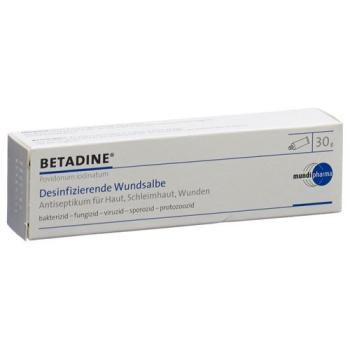
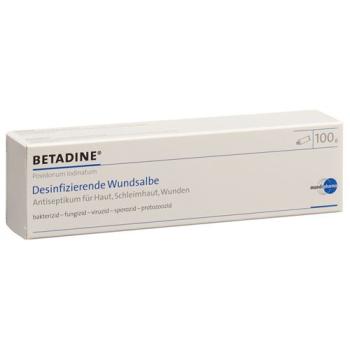
BETADINA disinfecting wound ointment 10 mg/g Tb 100 g
BETADINA desinfizierende Wundsalbe 10 mg/g Tb 100 g
Send a request to get a price
Not availableAnalogues of the product based on the Anatomical Therapeutic Chemical (ATC) Classification - D08AG02
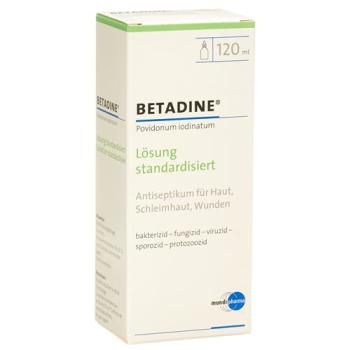
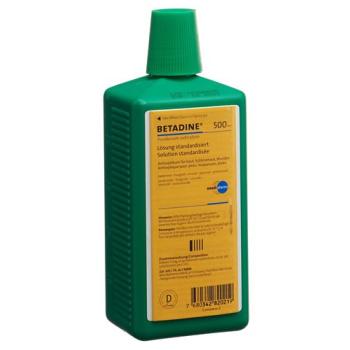
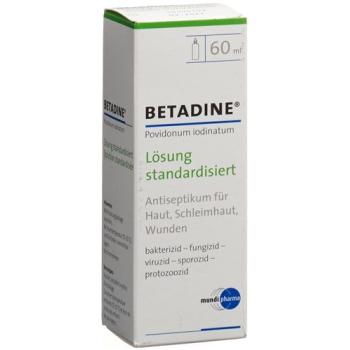
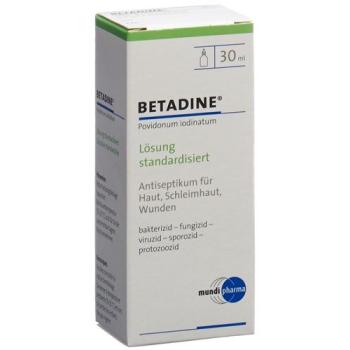
Description - BETADINA disinfecting wound ointment 10 mg/g Tb 100 g
Betadina disinfecting wound ointment is a fat-free, water-soluble ointment for external use. It kills bacteria, fungi, viruses and other pathogens that cause infection. Betadina disinfecting wound ointment is used to prevent infections in small wounds on the skin and mucous membranes, small, minor burns (without blistering), skin damage, skin tears and abrasions. Only with a doctor's prescription, Betadina disinfecting wound ointment is used to treat infected wounds.
Swissmedic-approved patient information
BETADINA? Disinfectant Ointment
What is Betadina Disinfectant Ointment and when is it used?
Betadina Disinfectant Ointment is a fat-free, water-soluble ointment for external use. It kills bacteria, fungi, viruses and other pathogens that cause infection. Betadina disinfecting wound ointment is used to prevent infections in small wounds on the skin and mucous membranes, small, minor burns (without blistering), skin damage, skin tears and abrasions. Only with a doctor's prescription, Betadina disinfecting wound ointment is used to treat infected wounds.
What should be considered?
Large, heavily soiled and deep wounds as well as severe burns, bites and puncture wounds require medical treatment (including the risk of tetanus spasms) . If the size of a wound remains unchanged for some time or if the wound does not heal within 10-14 days, a doctor's visit is also necessary; The same applies if the edges of the wound are very red, the wound suddenly swells, is very painful or the injury is accompanied by fever (danger of blood poisoning).
When must Betadina disinfecting wound ointment not be used?
Betadina disinfecting wound ointment must not be used:
- in the case of hypersensitivity to povidone-iodine, iodine, macrogol 400 or another ingredient,in the case of functional disorders and diseases of the thyroid gland,in the case of dermatitis herpetiformis Duhring (very rare , herpes-like skin disease),before, during and until the end of an examination or treatment of the thyroid with labeled iodine (radio-iodine application), as this is affected by Betadina disinfecting wound ointment,with the simultaneous use of preparations containing mercury, since a substance is formed that can damage the skin,in children under the age of 1 year.
When should you be careful when using Betadina disinfecting wound ointment?
If you suffer from thyroid disease or have a goiter, you should only use Betadina disinfecting wound ointment if your doctor has specifically told you to . Even after the end of treatment, early symptoms of possible hyperthyroidism should be observed for up to 3 months. Your doctor may monitor your thyroid function. Betadina disinfecting wound ointment should not be used during pregnancy and breastfeeding because thyroid dysfunction can occur in the unborn child and infants (see «Can Betadina disinfecting wound ointment be used during pregnancy or while breastfeeding?»). Betadina disinfecting wound ointment may only be used on small children aged 1-6 years if prescribed by a doctor. Thyroid function may need to be checked. Any ingestion of Betadina disinfecting wound ointment by a child should be avoided at all costs. In the case of metabolism-related hyperacidity of the blood (metabolic acidosis) and kidney failure, Betadina disinfecting wound ointment should not be used or the treatment should be discontinued. Betadina disinfecting wound ointment must not be used at the same time as or shortly after enzymatic wound treatment agents or disinfectants containing silver , hydrogen peroxide or taurolidine, as this can lead to a mutual weakening of the effect. Do not use Betadina Disinfecting Wound Ointment at the same time as or immediately after using disinfectants containing octenidine on the same or adjacent areas, as this may result in temporary dark discolouration. If you are being treated with lithium preparations, you should avoid using Betadina disinfecting wound ointment for a longer period of time or over large areas, since absorbed iodine can promote the possible triggering of hypothyroidism by lithium. Tell your doctor, pharmacist or druggist if you
- suffer from other illnesses,have allergies ortake other medicines (including those you bought yourself!) or use them externally!
Can Betadina disinfecting wound ointment be used during pregnancy or breastfeeding?
Betadina disinfecting wound ointment should not be used during pregnancy and breastfeeding because the unborn child or newborn is relevant Maternal exposure to iodine can result in severe thyroid dysfunction in the newborn. Accidental ingestion of Betadina disinfecting wound ointment by the infant through the mouth through contact with the treated part of the nursing mother's body must be avoided. Tell your doctor, pharmacist or druggist if you are pregnant or breastfeeding.
How do you use Betadina disinfecting wound ointment?Adults, adolescents and children over 6 years
If prescribed by your doctor Unless otherwise instructed by your doctor, apply Betadina disinfecting wound ointment as follows: Pour the ointment directly from the tube onto the area to be treated or onto a swab or apply a gauze; spread carefully on the wound. If necessary, cover with bandage. As long as the golden-brown color of the Betadina disinfecting wound ointment is visible, the ointment coating has a disinfecting effect. Discoloration means a decrease in effectiveness and signals that a new application should take place. Therefore, apply new Betadina disinfecting wound ointment if you notice a clear discoloration. Also, reapply the ointment every time you change the dressing. Betadina disinfecting wound ointment can be used several times a day. Continue treatment until healing. If your symptoms have not improved after several days (2-5 days) of regular use, or if symptoms reappear after completing treatment, you should see your doctor. In the event of accidental ingestion, the doctor must be informed immediately.
Children from 1 to 6 years
Betadina disinfecting wound ointment must not be used in newborns and infants under the age of 1 year (see «When must Betadina disinfecting wound ointment not be used?» ). For small children up to 6 years of age, only use if prescribed by a doctor (see «When is caution required when using Betadina disinfecting wound ointment?») Stick to the dosage given in the package leaflet or as prescribed by your doctor. If you think the medicine is too weak or too strong, talk to your doctor, pharmacist or druggist.
What side effects can Betadina disinfecting wound ointment have?Rarely (affects 1 to 10 in 10,000 people treated)
In rare cases hypersensitivity or contact dermatitis (with symptoms such as skin reddening, blisters, itching) can occur.
Very rare (affects less than 1 in 10,000 people treated)
In very rare cases, acute, painful swelling of the skin or mucous membranes (angioedema) and acute general allergic reactions can occur may occur with a drop in blood pressure and/or shortness of breath (anaphylactic reaction). In such cases, the treatment should be stopped immediately and the doctor informed immediately. Significant iodine uptake may occur with prolonged use on extensive areas of skin, wounds or burns. In very rare cases, patients with thyroid disease may have an overactive thyroid with symptoms such as increased heart rate or inner restlessness. In individual cases, hypothyroidism, disturbances in the electrolyte balance, metabolism-related hyperacidity of the blood (metabolic acidosis), acute kidney failure and abnormal blood osmolarity can occur. If you get any side effects, talk to your doctor, pharmacist or druggist. This also applies in particular to side effects that are not listed in this leaflet.
What else needs to be considered?Shelf life
The medicinal product may only be used up to the date marked on the container with « EXP» can be used.
Storage instructions
Store at room temperature (15-25°C) and out of the reach of children.
Further information
Do not ingest, do not use in the eye. Betadina disinfecting wound ointment ? ??stains can be washed out of natural fibers with soap and water, of synthetic fibers with diluted ammonia or sodium thiosulphate solution. Your doctor, pharmacist or druggist can provide you with further information. These people have the detailed information for specialists.
What does Betadina disinfecting wound ointment contain?Active ingredients
1 g wound ointment contains 10 mg iodine as povidone iodine.
Excipients
Ointment base with macrogol 400 and other excipients.
Approval number
67687 (Swissmedic)
Where can you get Betadina disinfecting wound ointment? What packs are available?
In pharmacies and drugstores, without a doctor's prescription. Tubes of 30 and 100 g
Authorization holder
Mundipharma Medical Company, Hamilton/Bermuda, Basel branchThis package leaflet was last checked by the Medicines Agency (Swissmedic) in August 2021.