

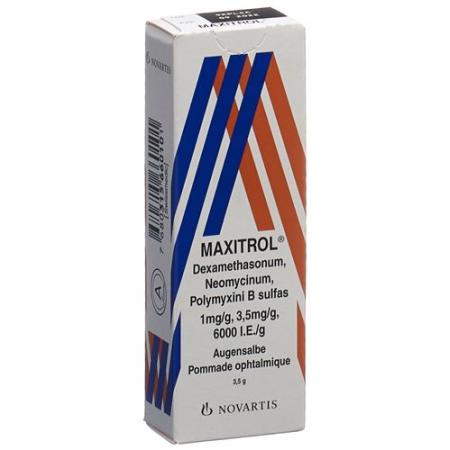
Maxitrol Eye Ointment Tb 3.5 g
Maxitrol 3.5 g Augensalbe
Send a request to get a price
In stock 200 pcsAnalogues of the product based on the active ingredient
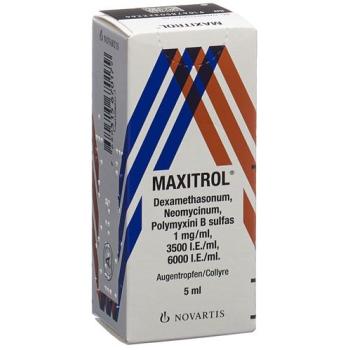


Analogues of the product based on the Anatomical Therapeutic Chemical (ATC) Classification - S01CA01
| Name | Code | EAN | Price | Original | ||
|---|---|---|---|---|---|---|
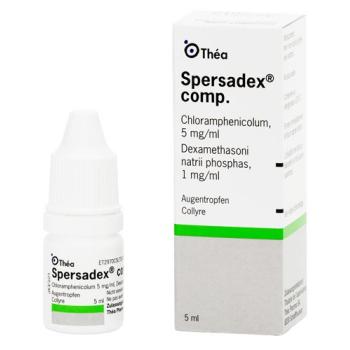 |
Spersadex comp. Gtt Opht Fl 5 ml | 1555361 | 7680305140255 | - | Read more | |
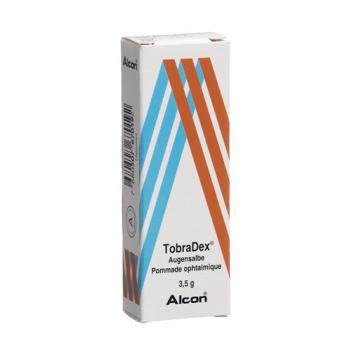 |
Tobradex Eye Ointment Tb 3.5 g | 1611711 | 7680507670192 | - | Read more | |
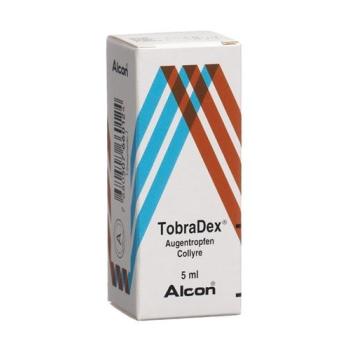 |
Tobradex Susp Opht Drop Bottle 5ml | 1611705 | 7680507660124 | - | Read more | |
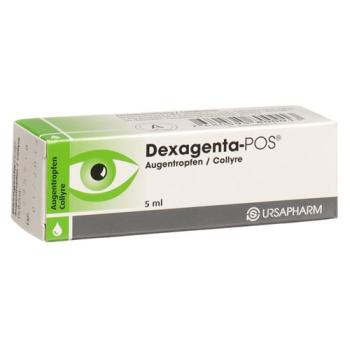 |
Dexagenta-POS Gtt Opht Fl 5ml | 4686827 | 7680595800013 | - | Read more | |
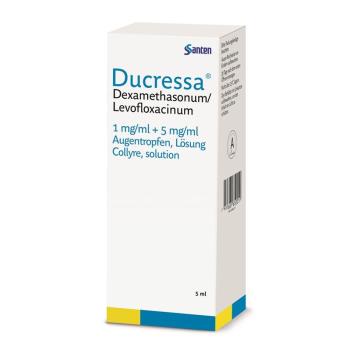 |
DUCRESSA Gtt Opht | 7840304 | 7680681650010 | - | Read more |
Description - Maxitrol Eye Ointment Tb 3.5 g
What is Maxitrol eye ointment and when is it used?
Prescriptened by your doctor.Maxitrol eye ointment is a medicine used to treat infected eye infections.
What precautions should be taken?
The antibiotics contained in Maxitrol eye ointment (neomycin and polymyxin B sulfate) are not effective against all pathogens that cause eye infections. Incorrect use of the drug may cause complications. Therefore, never use Maxitrol eye ointment of your own accord for the treatment of other diseases or for third parties. In the event of new infections of the eye later on, you may only use Maxitrol eye ointment if you have received a new doctor's prescription.Your doctor must regularly check your eyes throughout the entire duration of treatment with this medicine.If you are using more than one medication for the eyes, leave an interval of at least 5 minutes between applications. If ointments are used, these should be used at the end.
When should Maxitrol eye ointment not be used?
Maxitrol eye ointment must not be used in the case of known or suspected hypersensitivity (allergy) to one of the ingredients of Maxitrol eye ointment, in the case of various viral diseases of the eye, certain bacterial eye infections, fungal diseases or untreated parasitic infections of the eye, injuries and ulcers of the cornea and in newborns .
When is caution required when taking / using Maxitrol eye ointment?
- Blurred vision may appear immediately after applying eye ointments. Therefore, do not drive or use machines for at least 20 minutes after using the medicine.If an allergic reaction develops, such as itching of the eyes, swelling of the eyelid or reddening of the eyes, stop the therapy and consult your doctor. Allergic reactions can manifest themselves very differently from local itching, reddening of the skin to severe skin reactions. These allergic reactions can also occur with other treatments (topical or holistic) with an antibiotic of the same type (amyloglycosides). If you use other antibiotics together with Maxitrol eye ointment, ask your doctor.If Maxitrol eye ointment is used for a long time, there is a risk of fungal infectionCorticosteroids can mask, activate, or worsen an infection in the eye. If Maxitrol eye ointment is used for a long time, this can lead to delayed wound healing. It can also lead to an increase in intraocular pressure and, as a result, to glaucoma. During the treatment with Maxitrol eye ointment you should be under constant medical supervision, whereby the intraocular pressure should be measured regularly by the doctor.If the eye complaints treated with Maxitrol eye ointment worsen after 2-3 days of treatment or if new symptoms appear, consult your doctor immediately.If you suffer from diseases which result in thinning of the tissues around the eye (cornea or sclera): Topical use of corticosteroids can cause perforation of the eye.If you have diabetes (especially type I diabetes), there is a risk of cataracts. The use of corticosteroids in diabetics increases the risk of early and rapidly occurring cataracts.If swelling occurs on the trunk and face (Cushing's syndrome), you should tell your doctor. This risk is particularly important in children and patients treated with ritonavir or cobicistat.Tell your doctor or pharmacist if you suffer from other diseases (especially diabetes), glaucoma, or if you have increased eye pressure, if you have had eye infections or injuries caused by viruses (herpes) or fungi in the past or have had ulcer processes of the cornea, if you have allergies or if you are taking other medicines (including those you bought yourself) or apply them to the eye!
Note for contact lens wearers
You must not wear contact lenses during treatment with Maxitrol eye ointment.This medicinal product contains methyl parahydroxybenzoate (E218) and propyl parahydroxybenzoate (E216), which can cause allergic reactions, including late-stage reactions.This medicine contains wool wax. Wool wax can cause local skin irritation (eg contact dermatitis).
Can Maxitrol eye ointment be used during pregnancy or breastfeeding?
Use during pregnancy is not recommended. It may only be used during breastfeeding with the express permission of your doctor.
How do you use Maxitrol eye ointment?
The doctor determines the dosage. As a rule, a small strand of ointment should be inserted into the conjunctival sac of the affected eye up to 3-4 times a day.The use and safety of Maxitrol in children and adolescents has not yet been tested.If too much Maxitrol eye ointment gets into the eye, rinse the eye out with lukewarm water.Do not use until it is time for the next scheduled application.If you forget Maxitrol eye ointment, continue the treatment as planned. Do not use a double dose to make up for a missed dose.Do not change the prescribed dosage on your own. If you think that the medicine is too weak or too strong, talk to your doctor or pharmacist
What side effects can Maxitrol eye ointment have?
The following side effects may occur when using Maxitrol eye ointment:Commonly (affects 1 to 10 users in 100) the following side effects may occur: inflammation of the skin around the eyes,Uncommon (affects 1 to 10 in 1000 users): Hypersensitivity reactions, corneal inflammation, increased eye pressure, itching of the eye, discomfort to the eye, eye irritation.Rarely (affects 1 to 10 in 10,000 users): Second infections in the eye, changes in visual acuity and field of vision, delayed wound healing or cataracts, glaucoma,Very rarely (affects less than 1 in 10,000 users): protrusion of the eyeball (exophthalmos), perforation of the cornea (damage to the cornea with a breakthrough)
Post-marketing experience shows the following side effects:Individual cases:
Effects on the eyes: ulcerative corneal inflammation, blurred vision, sensitivity to light, dilated pupil, drooping of the upper eyelid, eye pain, eye swelling, foreign body sensation in the eye, eye reddening, increased tearingEffects on the body: allergy, headache, severe skin reaction ( Stevens-Johnson syndrome).Further side effects of the individual active ingredients that can potentially occur with Maxitrol eye ointment:
Dexamethasone
Effects on the eyes: dry eyes, conjunctivitis, blurred vision, abnormal sensations in the eye, crusting of the eyelid margin, corneal erosion, eye pain.Effects on the body: taste disturbances, drowsiness, hormonal changes, e.g. increased body hair (especially in women), muscle weakness and wasting, stretch marks on the skin, high blood pressure, irregular or missed menstruation, changes in protein and calcium concentration in the body, short stature in children and teenagers, as well as swelling and widening of the trunk and face (Cushing's syndrome).Active substances contained in eye ointments can enter the bloodstream. Side effects are possible in other parts of the body besides the eyes. In the event of any side effects (especially skin allergies and rashes around the eyes or hypersensitivity reactions) which you suspect to be related to the use of Maxitrol eye ointment, discontinue the treatment and consult your doctor or pharmacist immediately.If you get any side effects, talk to your doctor, pharmacist. This also applies in particular to side effects that are not listed in this leaflet.
What should also be noted?
The drug may only be used up to the date marked ?EXP? on the container.
Use-by period after opening
Do not use the contents longer than 30 days after opening the tube.
Application note
In order not to impair the sterility of the eye ointment, do not touch the tip of the tube with either your eyes or your hands. Close the tube tightly immediately after use.
Storage advice
Store at room temperature (15-25 ° C), protected from the effects of heat and light and out of the reach of children.
More information
Your doctor or pharmacist can provide you with further information. These people have the detailed information for specialists.After the end of the treatment, please bring each tube with the remaining eye ointment to your dispensing point (doctor's practice or pharmacy) for proper disposal.
What is in Maxitrol eye ointment?
1 g eye ointment contains:
Active ingredients
1 mg dexamethasone, 3.5 mg neomycin, 6000 UI polymyxin-B
Auxiliary materials
Wool wax, paraffin, E216 and E218
Approval number
31566 (Swissmedic).
Where can you get Maxitrol eye ointment? Which packs are available?
In pharmacies against a doctor's prescription, which only entitles the holder to purchase once.
- Maxitrol eye ointment 3.5 g
Marketing authorization holder
Novartis Pharma Schweiz AG, Risch; Domicile: 6343 Rotkreuz.??